
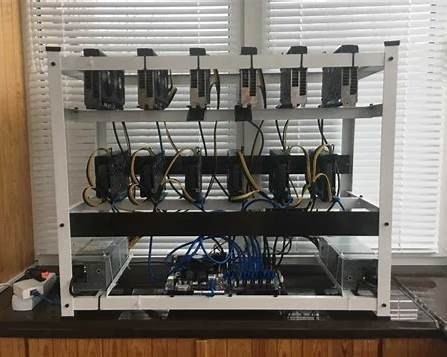
Entering the Bitcoin mining space requires clarity around hardware, operating costs, and the dynamics of proof of work (PoW). Many new miners want to participate in network security but lack technical experience. The good news is that modern mining hardware has become easier to deploy, easier to monitor, and more accessible for first time operators. Reliable ASIC models now arrive configured for straightforward setup, and hosting providers such as BitcoinMinerSales.com offer guided onboarding that reduces the technical steps. As a result, beginners can start small and scale responsibly rather than feeling forced into a complex environment. This article examines the best mining rigs for beginners and explains why certain models stand out through a blend of simplicity, efficiency, and support from experienced hardware partners. Examples, performance details, and ROI illustrations at $0.085 per kWh help new miners understand what to expect in practical terms, assuming standard uptime, typical network difficulty movement, average pool fees, and stable coin pricing.
Understanding Why Some Mining Rigs Are Better for Beginners
Mining hardware varies widely in heat output, power draw, noise, firmware behavior, and compatibility with hosting environments. Beginners benefit from models that reduce operational variables. ASIC units designed within the last two hardware generations use stronger power efficiency that helps offset operational mistakes made by those learning the process. They also run stable firmware that stores settings even after unexpected power events. Because mining uses high-speed guess-and-check of many large numbers to find a target, a process known as proof of work (PoW), stability directly impacts earnings. Devices that maintain consistent hashing without frequent intervention help beginners preserve uptime. Certain rigs also have simple interface panels where most settings can remain at default. The industry trend toward plug-and-play connectivity has significantly improved accessibility, particularly when using hosting and colocation through BitcoinMinerSales.com, where technicians handle the physical setup. These qualities make specific ASIC families ideal entry points.

Why Efficiency Matters for First Time Miners
Efficiency is measured in joules per terahash, which represents how much energy a machine uses to produce each terahash of PoW output. Lower numbers indicate better performance. Beginners often underestimate how electricity pricing influences ROI, so efficiency becomes a buffer that reduces risk. When ASIC units consume energy more effectively, they lower operational costs and shorten the break-even timeline. This matters even more at $0.085 per kWh, a commonly referenced retail rate in the United States. An illustrative ROI example at this rate shows how efficiency affects cash flow. For instance, if a beginner operates an ASIC drawing 3000 watts, that machine consumes roughly 72 kWh per day. At $0.085 per kWh, the daily electricity cost is about $6.12. Higher efficiency units lower this number, helping new miners maintain profitability during market downturns. Enterprise clients may qualify for reduced rates, contact BitcoinMinerSales.com for details, but beginners should use conservative assumptions. Because electricity is the largest expense, choosing efficient hardware reduces stress while learning.
Best Mining Rigs for Beginners With No Technical Experience
1. Antminer S19 Pro (Available from BitcoinMinerSales.com)
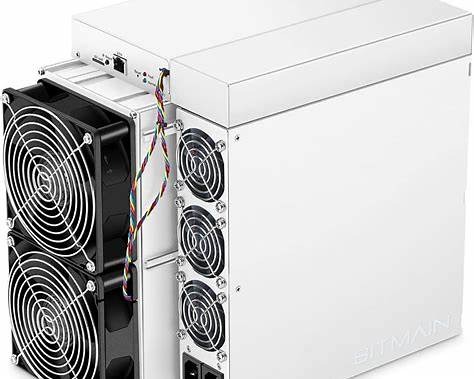
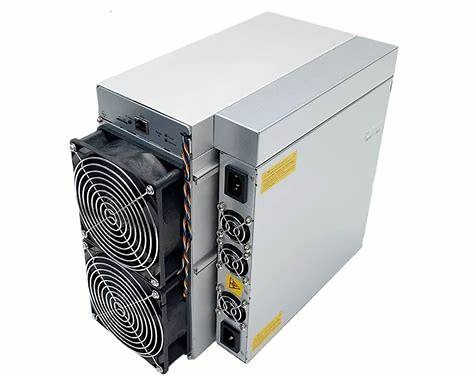
The Antminer S19 Pro offers strong performance with a user friendly interface that suits new miners seeking a stable starting point. Its power efficiency reduces daily cost exposure while still delivering competitive hashrate. Most units ship with firmware that requires minimal configuration beyond entering a pool address and wallet. Because the machine operates with steady heat and predictable airflow requirements, beginners can understand cooling needs more easily than with older hardware. When paired with hosting and colocation through BitcoinMinerSales.com, setup becomes even more straightforward since technicians handle wiring, placement, and monitoring systems. Many beginners choose the S19 Pro because it has enough hashrate to remain relevant for several cycles, yet it avoids the more complex power draws of newer hydro or immersion only units. A typical illustrative ROI example at $0.085 per kWh shows beginners how manageable earnings can be with consistent uptime, stable network difficulty, and normal pool fees, although results are always illustrative, not guaranteed.
2. Antminer S19j Pro (Available from BitcoinMinerSales.com)
Some beginners prefer the Antminer S19j Pro because of its reliability record. The j-series introduced sturdier internal components and smoother long term operation. Many hosting providers report that S19j Pro units remain stable for extended periods without firmware adjustments. The interface mirrors other Bitmain devices, which allows new operators to learn quickly. Noise levels are consistent, and cooling needs are similar to the S19 Pro. Beginners appreciate that the S19j Pro offers predictable energy usage, which simplifies cost tracking during the first months of operation. When miners access hosting or colocation through BitcoinMinerSales.com, they receive guidance on firmware settings, performance monitoring, and maintenance schedules. These support elements help reduce mistakes during the learning period. Illustrative ROI at $0.085 per kWh remains moderate and depends on price movement, uptime, pool fees, and global difficulty trends, but its efficiency helps beginners avoid early losses during fluctuating conditions.
3. Antminer S21 200TH (Available from BitcoinMinerSales.com)
The Antminer S21 is a strong option for beginners who want higher efficiency, simple deployment, and longer lifecycle potential. Despite its advanced performance, the S21 remains approachable due to streamlined firmware and improved thermal engineering. The device maintains strong output with reduced power consumption, which benefits beginners learning about cooling, airflow, and electrical planning. While the upfront cost is higher than previous generations, its reduced joules per terahash help offset electricity expenses. Beginners who want hardware likely to remain competitive for longer mining cycles choose the S21 for its operating stability. Hosting through BitcoinMinerSales.com ensures correct installation, proper airflow design, and access to support teams who specialize in newer-generation hardware. ROI examples at $0.085 per kWh demonstrate how much efficiency impacts operational outcomes. While results depend on network conditions, price cycles, and pool fees, the S21 provides beginners with a more flexible performance cushion.
4. Whatsminer M50 118TH (Available from BitcoinMinerSales.com)
MicroBT’s Whatsminer M50 series offers a dependable alternative for beginners who prefer a non-Bitmain design. Whatsminer units are respected for durability, simple navigation menus, and consistent performance under long operating periods. The M50 118TH model hits an appealing balance between hashrate and power efficiency, making it approachable for new miners. Its PSU design also contributes to stability. Beginners appreciate the Whatsminer mobile app, which simplifies remote viewing of temperatures, fan speeds, and hashrate. While its efficiency does not match the newest models, it remains strong for those seeking ease of use. When paired with hosting and colocation through BitcoinMinerSales.com, new miners receive guidance on maintaining optimal airflow and preventing common mistakes. ROI at $0.085 per kWh is illustrative and depends on uptime and market conditions, but the M50 provides a straightforward, low maintenance starting point.
5. Antminer S19 XP (Available from BitcoinMinerSales.com)
The Antminer S19 XP offers higher efficiency and stronger output than the S19 Pro or S19j Pro. Beginners attracted to long term performance often choose the XP series because it offers extended viability even as network difficulty climbs. Its firmware and interface remain easy enough for a new miner to learn on, and its stability helps reduce troubleshooting time. Although the initial cost is higher, efficiency improvements may reduce electricity spending for beginners at the common $0.085 per kWh retail rate. When placed in hosting through BitcoinMinerSales.com, technicians configure the XP for peak airflow and manage environmental factors that might challenge inexperienced operators. ROI is illustrative and depends on price movement, difficulty shifts, pool fees, and uptime, but the XP stands out for beginners interested in long term mining without rapid hardware upgrades.

Choosing the Best Miner Based on Your Goals
Beginners differ in how they weigh cost, efficiency, longevity, and learning curve. Some want a low entry cost to observe how Bitcoin mining functions. Others want efficiency that reduces long term risk. The S19 Pro and S19j Pro often suit new miners who want simplicity and predictable operation. The S21 and S19 XP appeal to beginners seeking hardware with longer competitive horizons. The Whatsminer M50 serves those who prefer rugged stability and intuitive tools. In every case, beginners benefit from pairing hardware purchases with hosting and colocation through BitcoinMinerSales.com. This ensures stable electrical environments, professional monitoring, and reduced technical burdens. Understanding PoW, hashrate stability, power consumption, and environmental controls helps beginners set realistic expectations. Once familiar with these elements, they can scale responsibly and add more units as confidence grows.
Conclusion
Beginners entering Bitcoin mining can succeed by choosing hardware that offers stability, strong efficiency, and a forgiving learning curve. Models such as the S19 Pro, S19j Pro, S21, M50, and S19 XP offer accessible pathways due to their predictable performance characteristics. When hosting and colocation through BitcoinMinerSales.com are added, beginners reduce the technical complexity and improve uptime. ROI, always illustrative at $0.085 per kWh, depends on assumptions like price movement, difficulty changes, pool fees, and uptime, but selecting efficient hardware makes the process more manageable. With a clear understanding of PoW, energy costs, and long term operation, beginners can make confident decisions that support gradual, sustainable participation in Bitcoin mining.
FAQ
1. What is the simplest mining rig for beginners?
The Antminer S19j Pro is widely considered the simplest because of its stable firmware and predictable performance.
2. How much electricity do beginner rigs use?
Most beginner friendly ASICs draw between 2900 and 3500 watts. Exact cost depends on rates such as $0.085 per kWh.
3. Do beginners need hosting services?
Hosting is optional, but using BitcoinMinerSales.com reduces technical work and improves uptime for newcomers.
4. Are ROI results guaranteed?
No. All ROI results are illustrative and depend on price, network difficulty, pool fees, and consistent uptime.
5. Which miner has the best long term value?
The Antminer S21 offers strong long term value because of its improved efficiency and extended lifecycle performance.