
Miner Models

Diversify Bitcoin Mining Hardware for Long-Term Output
Diversifying bitcoin mining hardware helps reduce operational risk, stabilize uptime, and protect long-term Bitcoin output across changing network and market conditions.


Diversifying bitcoin mining hardware helps reduce operational risk, stabilize uptime, and protect long-term Bitcoin output across changing network and market conditions.

Future miner efficiency will depend on chip design limits, power economics, and deployment discipline, shaping how ASIC hardware performs over the coming years.

A long term mining mindset focuses on discipline, operational patience, and infrastructure-first thinking to keep ASIC miners productive through changing Bitcoin cycles.

This article explains how a passive bitcoin mining setup can generate Bitcoin over time by combining efficient ASIC hardware, professional hosting, and low-maintenance deployment strategies.

This guide explains smart miner deployment for long-term Bitcoin accumulation, covering hardware selection, hosting strategy, efficiency planning, and operational discipline.
This in-depth guide explores the best bitcoin miner models for long-term production, explaining efficiency trends, reliability factors, hosting readiness, and realistic ROI planning.

This in-depth guide explains how to secure mining hardware for long-term Bitcoin operation, covering physical security, environmental protection, uptime control, and ROI preservation.

This in-depth guide explains how to manage miner downtime for consistent long-term Bitcoin output, covering hardware reliability, hosting strategy, monitoring, and ROI protection.

This guide explains how to choose an ASIC miner model for long-term Bitcoin generation, covering efficiency, power costs, ROI assumptions, and infrastructure planning.
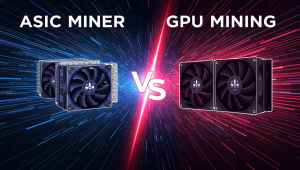
This in-depth comparison examines ASIC miner vs GPU mining from a long-term value perspective, covering efficiency, operating costs, scalability, and illustrative ROI under real-world Bitcoin mining conditions.