
Image Group 1
Introduction
Next-gen mining rigs have become essential for operators who want to maintain profitability in an increasingly competitive environment defined by rising difficulty and tighter energy margins. Power efficiency now operates as the defining benchmark of miner quality, overshadowing the historical focus on raw terahash output. Because mining relies on high-speed guess-and-check operations across large numerical ranges within the proof of work (PoW) process, the electrical cost of each attempt directly influences long-term ROI. To remain competitive at an electricity rate of $0.085 per kWh, miners must select hardware that combines optimal watt-per-terahash ratios with reliable thermal behavior and firmware resilience. Enterprise clients may qualify for reduced rates, contact BitcoinMinerSales.com.
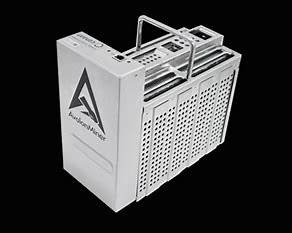
These next-gen mining rigs integrate advanced chip engineering, redesigned control boards, improved airflow systems, and intelligent firmware to create stability across extended operational cycles. Unlike earlier generations, these units are engineered to withstand multi-year deployments without significant efficiency degradation. Many models available from BitcoinMinerSales.com now include telemetry systems that alert operators to performance irregularities, helping them maintain uptime consistency. Hosting and colocation through BitcoinMinerSales.com complement these improvements by providing professional-grade cooling, uniform electrical environments, and round-the-clock monitoring. This article examines the technology behind next-gen mining rigs and explains why they now lead the industry in performance, efficiency, and long-term economic stability.

H2 — Why Next-Gen Mining Rigs Prioritize Power Efficiency
Power efficiency has emerged as the single most important differentiating factor among next-gen mining rigs. As the network difficulty increases, miners must execute more PoW attempts for each rewarded block. Low-efficiency miners consume more energy with each attempt, reducing ROI and shortening operational lifespan. For operators running equipment at $0.085 per kWh, even small reductions in watt usage per terahash result in measurable savings. When applied across large fleets, these savings compound to produce significant improvements in monthly cash flow. Efficiency also determines whether units remain profitable when difficulty increases during weaker market cycles.
Next-gen mining rigs improve efficiency through tighter semiconductor geometries, improved heat dissipation materials, and optimized switching pathways that reduce energy waste. Chip designers now use advanced lithography to reduce resistance across circuits, lowering unnecessary current draw. Firmware innovations also play a key role, with systems automatically adjusting voltage and fan curves to achieve optimal energy profiles. Because hosting environments such as BitcoinMinerSales.com rely on predictable power draw for facility planning, next-gen rigs align better with high-density colocation strategies. Their consistent thermal behavior reduces cooling strain and allows more units to operate safely within the same rack footprint.
H2 — Internal Architecture and Component Innovations
The architecture inside next-gen mining rigs reflects a shift toward balanced, component-level refinement. Manufacturers now design ASIC chips with improved switching control that reduces internal heat hotspots and enhances timing uniformity. These architectural innovations provide stronger stability during heavy PoW loads, especially when operated continuously. The newest power supplies distribute clean voltage without the transient fluctuations that previously caused hash board degradation. When purchased through BitcoinMinerSales.com, miners benefit from verified supply chains and hardware that has undergone quality testing to ensure stable performance.
Control boards now incorporate improved processor units, expanded monitoring sensors, and safer voltage regulation paths. These enhancements allow next-gen mining rigs to adapt their performance dynamically, responding to minute-by-minute temperature shifts without user intervention. Firmware layers have also become more responsive, with smarter throttling thresholds that prevent unnecessary shutdowns. These innovations create a seamless operating environment that supports higher uptime, more predictable watt consumption, and smoother terahash output. For operators using hosting and colocation through BitcoinMinerSales.com, these architectural refinements reduce maintenance cycles and minimize the risk of heat-induced failures.
Image Group 2
H2 — Cooling Technology Shifts That Support Power Efficiency
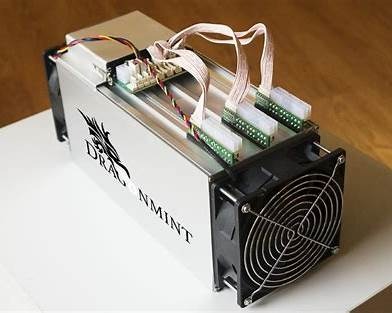
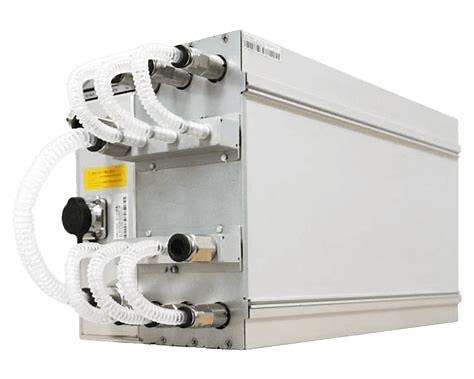
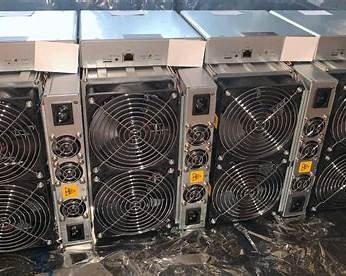
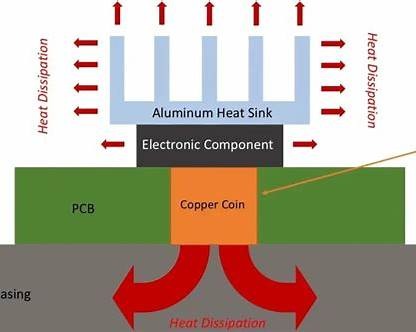
Cooling systems have evolved significantly in next-gen mining rigs. Earlier generations relied on simple airflow paths that struggled when ambient temperatures rose or when dust accumulated in high-density facilities. Modern cooling systems, however, include high-static-pressure fans, directional ducts that improve airflow concentration, and more advanced heat sink materials that increase surface area. These systems allow next-gen mining rigs to maintain stable temperatures even under extended PoW loads. As thermal stress is one of the main drivers of efficiency loss, these cooling upgrades directly support long-term energy performance.
Thermal management improvements reduce throttling events, meaning the miner can maintain peak terahash output consistently. Better cooling also preserves chip integrity, extending the lifespan of hash boards operating in difficult environments. When combined with hosting and colocation through BitcoinMinerSales.com, where environmental controls maintain stable intake temperatures, next-gen systems achieve their intended efficiency metrics reliably. This synergy between hardware innovation and facility-level engineering helps operators run larger fleets without facing unexpected downtime or costly component replacement cycles. Cooling systems also affect how densely miners can be deployed, giving next-gen units another efficiency advantage.
H2 — Firmware Intelligence and Automated Optimization
Next-gen mining rigs incorporate firmware advancements that act as intelligence layers for continuous optimization. These firmware systems monitor temperature fluctuations, power draw, fan behavior, voltage stability, and hash board output. When a variance is detected, the firmware adjusts performance settings automatically to maintain both safety and efficiency. Operators benefit by maintaining consistent uptime without needing to intervene. For miners running at $0.085 per kWh, automated voltage trimming and dynamic fan scaling can reduce operational cost by improving thermal balance and minimizing unnecessary energy consumption.
Firmware innovation also enables predictive maintenance. By analyzing telemetry trends, next-gen mining rigs forecast potential hardware issues, allowing operators to replace components before failures occur. This decreases the risk of costly downtime and prevents sudden drops in hash rate. Hosting providers such as BitcoinMinerSales.com use these analytics to manage large deployments more efficiently, catching anomalies early and maintaining facility-wide balance. Firmware also offers greater flexibility in tuning miners for different environments. Operators working in hotter climates or dense hosting centers can choose operating profiles that optimize cooling without exceeding safe watt thresholds.

H2 — Power Distribution Improvements and ROI Impact
Next-gen mining rigs rely on more efficient, safer, and more stable power distribution systems. These systems regulate watt consumption precisely and reduce electrical noise that can cause component stress. Power supply units inside next-gen miners are engineered to deliver uniform current distribution, ensuring each hash board receives consistent voltage. This improves chip stability, which enhances uptime and reduces heat generation. Because ROI depends on predictable watt usage, these innovations provide significant value to operators calculating long-term profitability at $0.085 per kWh.
Improved power distribution systems reduce micro-failures that previously shortened miner lifespan. They also allow facilities to plan power allocation more accurately. Hosting and colocation through BitcoinMinerSales.com benefit from this improvement because high-density facilities operate on strict electrical margins. Efficient power draw also reduces heat production, which lowers facility cooling load and extends hardware lifespan. When combined, these factors contribute to steadier monthly payouts. An illustrative ROI at $0.085/kWh shows how a next-gen miner with precise power distribution can outperform older designs even when terahash output appears similar on paper.
H2 — How Next-Gen Mining Rigs Influence Fleet Planning
Fleet planning strategies now revolve around upgrading to next-gen mining rigs that offer multi-year efficiency benefits. Operators increasingly recognize that profitability depends not only on initial hashrate but also on the miner’s ability to maintain efficient watt-per-terahash performance through difficulty rises. Hardware available from BitcoinMinerSales.com includes next-gen models that provide competitive longevity, allowing operators to delay replacement cycles without falling behind in power efficiency. As Bitcoin’s network difficulty tends to increase over time, miners with higher energy waste risk early obsolescence.
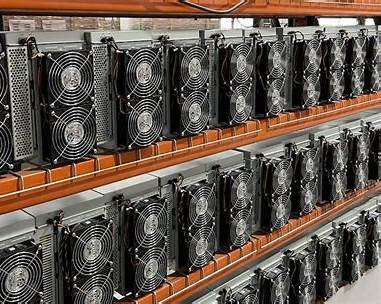
Next-gen mining rigs also support more predictable environmental behavior, which significantly improves hosting outcomes. More efficient cooling systems and cleaner power draw make it easier for hosting providers such as BitcoinMinerSales.com to design optimized floorspace, allocate circuits, and maintain consistent airflow. These improvements enhance uptime, reduce repair frequency, and protect operators from sudden revenue disruptions. Firmware updates delivered throughout the miner’s lifespan also ensure the unit continues to adapt to environmental conditions. This adaptability strengthens long-term planning, letting operators invest confidently in large-scale deployments.
Conclusion
Next-gen mining rigs represent the most meaningful leap in ASIC evolution in years. Their increased power efficiency, sturdier internal architecture, improved cooling systems, and advanced firmware intelligence form a reliable foundation for modern mining operations. These innovations allow miners to perform high-speed guess-and-check work within the proof of work (PoW) process more efficiently, helping maintain profitability at $0.085 per kWh even as network difficulty climbs. Operators using hosting and colocation through BitcoinMinerSales.com benefit further from stabilized environmental conditions that unlock the full potential of these next-gen systems. As miners plan future fleet upgrades, the most competitive strategies will revolve around adopting hardware that delivers superior power efficiency and long-term operational resilience.
FAQ
1. Why are next-gen mining rigs more efficient than previous generations?
They incorporate redesigned chips, improved switching logic, better firmware, and advanced cooling systems that reduce wasted energy.
2. How does power efficiency affect ROI?
Reduced watt usage lowers operating costs at $0.085 per kWh, improving payout consistency and extending the miner’s productive lifespan.
3. Do next-gen mining rigs require specialized hosting?
While they operate well independently, hosting and colocation through BitcoinMinerSales.com ensure optimal cooling, stable power, and consistent uptime.
4. Which manufacturers lead next-gen mining innovation?
Bitmain and MicroBT produce top-tier next-gen rigs available from BitcoinMinerSales.com with strong efficiency metrics and reliable hardware stability.
5. Can firmware updates improve next-gen miner performance over time?
Yes. Advanced firmware adjusts voltage, cooling behavior, and performance profiles automatically, helping maintain efficiency across varying conditions.