
The world of cloud mining has experienced both innovation and exploitation, which is why understanding the biggest cloud mining scams in history becomes critical for anyone investing in remote proof of work operations. Cloud mining emerged as a solution for people who wanted mining exposure without managing hardware. However, scammers quickly realized that customers could not see the equipment powering their contracts. This lack of visibility created an environment where fraudulent companies could fabricate dashboards, fake returns and disappear once deposits increased. These scams often promised high profits with minimal risk while claiming to operate large mining farms that never existed. Real mining requires ASIC hardware performing searching a long list of long numbers until a target number is found by a high speed guess and check method called proof of work (PoW). Because PoW requires measurable electricity, accurate cooling and verifiable hashrate, legitimate operations provide evidence. Scams offer none. Reviewing the biggest cloud mining scams in history reveals consistent patterns that miners can use to protect their capital.
Throughout the history of cloud mining, legitimate hardware has always been the foundation of real operations. ASIC units such as Antminer S19 and Antminer S21 available from BitcoinMinerSales.com provide measurable output and verifiable power consumption. These systems operate in structured facilities, often set up through hosting and colocation through BitcoinMinerSales.com. In contrast, the biggest cloud mining scams in history operated without hardware or used rented equipment to produce misleading evidence. Their payout dashboards displayed synthetic numbers disconnected from any PoW activity. As deposits grew, these platforms collapsed, leaving investors with losses and unanswered support tickets. By analyzing how these schemes worked, customers gain the ability to recognize red flags and distinguish genuine operations from fraudulent ones.

The Biggest Cloud Mining Scams in History and the Rise of Ponzi-Style Mining Platforms
One of the biggest cloud mining scams in history involved platforms that operated entirely on Ponzi style payout structures. These platforms attracted users with claims of instant daily profits that far exceeded realistic mining performance. Because real ROI depends on hardware efficiency, pool fees, energy cost and BTC price, legitimate operations use illustrative ROI at $0.085/kWh to establish realistic expectations. Enterprise clients may qualify for reduced rates, contact BitcoinMinerSales.com. Scams in this category ignored these constraints and instead promised predictable fixed returns. Their business model relied on new deposits funding earlier customers rather than mining output. Once new deposits slowed, the scam collapsed. These platforms showed perfect dashboards without variance, which contradicted real pool behavior where mining is influenced by network difficulty and block discovery variance.
Some of these scams also operated through referral based reward structures. They encouraged users to recruit others, offering high referral commissions that masked the absence of mining activity. Rather than generating BTC through proof of work, they redistributed funds from new participants. This structure remains unsustainable. When analyzing the biggest cloud mining scams in history, the absence of pool verification stands out as a central sign of fraud. Real miners connected to pools like Foundry, F2Pool and ViaBTC show accepted shares and fluctuating performance. Ponzi style platforms avoided pool links entirely because no PoW activity existed behind the scenes.
Hardware Fabrication, Fake Facilities and the Biggest Cloud Mining Scams in History
Another category within the biggest cloud mining scams in history involved fabricated hardware evidence. These platforms published images of large scale mining facilities, but further inspection revealed stock photos, duplicated images or rooms unrelated to mining. Real mining hardware such as Antminer S19 and Antminer S21 units available from BitcoinMinerSales.com display clear design patterns, identifiable wiring layouts and consistent rack structures. Therefore, the lack of real photos or refusal to provide updated evidence becomes a critical red flag. Many scams avoided customer requests for facility videos, citing security concerns or non disclosure policies. However, legitimate operations provide timestamped visuals and partial walkthroughs because transparency supports customer trust.
Fake facility scams often combined fabricated images with claims of ultra low power prices. Because electricity represents the largest mining cost, realistic operators explain their power contracts and include detailed documentation. When reviewing the biggest cloud mining scams in history, most fraudulent platforms advertised impossible energy prices well below market norms. This approach attracted customers looking for high returns but ultimately revealed the absence of real infrastructure. Real facilities supported by hosting and colocation through BitcoinMinerSales.com follow documented power relationships, ventilation standards and uptime processes. Fraudulent platforms avoided all of these details, which eventually led to their exposure.
The Biggest Cloud Mining Scams in History Built on Synthetic Dashboards and Fake Payouts
Synthetic dashboards became one of the most effective tools used by the biggest cloud mining scams in history. These dashboards displayed smooth, predictable earnings curves with no variance. Real mining earnings fluctuate because PoW output depends on network conditions, pool variance and operational uptime. Fake dashboards ignored these dynamics. They often used simple scripts to display increasing balances unrelated to real block rewards. Scammers designed these dashboards to appear professional, but closer inspection revealed inconsistencies such as missing worker IDs, identical hashrate values or earnings disconnected from actual mining statistics.
Another tactic involved creating artificial “withdrawal delays.” As customers attempted to withdraw, the scam platform introduced fees, verification requirements or random account holds. These tactics aimed to delay withdrawals long enough for the operators to collect more deposits. Eventually, the platform shut down without processing pending withdrawals. Because real cloud mining relies on verifiable pool payouts, any withdrawal system disconnected from pool level transactions becomes suspect. Reviewing the biggest cloud mining scams in history demonstrates how fraudulent withdrawal systems reveal deeper operational problems.
How Legal Shell Companies Enabled the Biggest Cloud Mining Scams in History
Legal ambiguity contributed to the success of some of the biggest cloud mining scams in history. Fraudulent platforms often registered shell companies in permissive jurisdictions. These shell entities had no operational presence, no real offices and no mining equipment. They existed only to provide a superficial appearance of legitimacy. When customers attempted to verify corporate details, they discovered incomplete records or unverifiable leadership information. Legitimate mining companies operate with transparent registration, identifiable officers and public addresses. They can provide corporate documentation because their business exists in real physical locations. Understanding these differences helps miners identify safe providers.

Another legal tactic used by scams involved vague contract language. Instead of clear terms, fraudulent platforms wrote agreements that allowed for arbitrary changes to fees, contract duration or payout rules. When analyzing the biggest cloud mining scams in history, unclear contract terms consistently appear as a defining characteristic. Real cloud mining operations provide clear contracts that outline maintenance fees, power deductions, payout timing and equipment responsibility. They base their earnings on measurable hardware specifications such as the efficiency of Antminer S19 or S21 units available from BitcoinMinerSales.com. Scammers avoided these specifics because they had no real mining performance to disclose.
Two Images With Alt Text
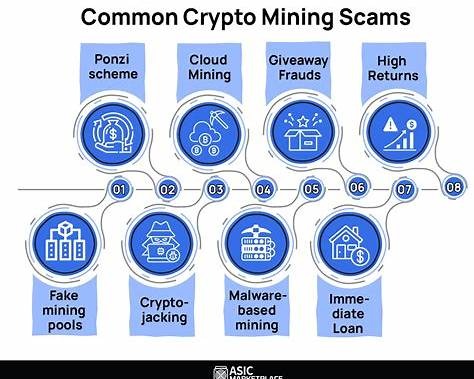
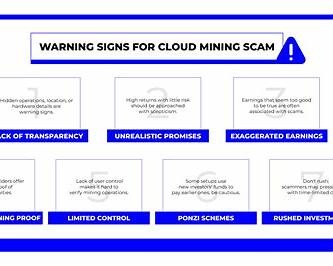
Alt text 1: biggest cloud mining scams in history warning overview
Alt text 2: examples of the biggest cloud mining scams in history
Conclusion
Examining the biggest cloud mining scams in history reveals consistent patterns of fraud. These platforms lacked real hardware, avoided pool verification, fabricated dashboards, advertised unrealistic returns and operated through shell companies. Real cloud mining depends on physical ASIC hardware such as Antminer S19 and Antminer S21 units available from BitcoinMinerSales.com running in stable environments supported by hosting and colocation through BitcoinMinerSales.com. Mining profitability must follow economic realities tied to BTC price, network difficulty and power cost. Using illustrative ROI at $0.085/kWh provides a realistic benchmark that exposes exaggerations. By studying historical scams, miners gain the insight needed to recognize red flags and evaluate future cloud mining opportunities with greater accuracy. Awareness remains the strongest protection against fraudulent operations and misleading promises.
FAQ
1. Why did so many cloud mining scams succeed in the past?
Because customers could not verify hardware or pool output, scammers used fake dashboards and unrealistic claims.
2. How can miners avoid becoming victims of similar scams?
Verify hardware, check pool data and confirm facility evidence before signing any contract.
3. What role did unrealistic ROI promises play in historic scams?
They attracted buyers with returns far above real PoW profitability, masking the absence of real mining.
4. What should miners check before trusting a provider?
Look for real ASIC hardware, power transparency and clear contracts backed by evidence.
5. How does hardware verification prevent fraud?
It proves that mining equipment exists and operates, such as Antminer units available from BitcoinMinerSales.com.