
Cloud mining appeals to buyers who prefer outsourced operations, predictable contract terms, and simplified participation in proof of work (PoW). Yet this convenience creates an environment where fraudulent companies thrive, especially when they exploit customer distance from the hardware. Because cloud mining removes direct physical control, the risk of entering contracts with blacklisted cloud mining companies increases when verification steps are ignored. A long list of failed providers illustrates how operations without hardware, without facilities, or without real hashrate often disappear once deposits accumulate. This pattern shows why due diligence matters. Buyers must recognize warning signs early, evaluate operational transparency carefully, and compare provider claims to what legitimate mining infrastructure looks like. Real facilities use proven hardware such as Antminer S19 or S21 units, available from BitcoinMinerSales.com, and they can demonstrate active proof of work output through pool dashboards. Blacklisted companies cannot supply this evidence, which becomes the first and clearest sign of risk.
Fraudulent cloud mining operators often advertise high payouts, instant daily rewards, and extremely low power costs. Since energy expenses represent the core cost of mining, any unrealistic claim should trigger caution. When calculating an illustrative ROI at $0.085/kWh, even small shifts in efficiency can change the equation significantly. A legitimate cloud mining provider explains its power contracts, shows utility relationships, and provides facility level details. Blacklisted companies avoid these details entirely because they do not operate real equipment. Instead, they use synthetic dashboards that display fabricated numbers unrelated to any active pool connection. Because proof of work depends on the high-speed guess-and-check of many large numbers to find a target, mining requires measurable hashrate. Fake companies simulate hashrate values without showing accepted shares or blocks from recognized pools. When a provider avoids sharing pool screenshots or rejects requests for external verification, the risk of misrepresentation is extremely high.

Blacklisted Cloud Mining Companies and Missing Hardware Evidence
The clearest signal of a blacklisted cloud mining company is the absence of verifiable hardware evidence. Real providers show serial numbers, timestamped facility photos, and detailed walkthrough videos that reveal active ASICs in racks. In contrast, fraudulent companies recycle stock photos or present “server room” footage unrelated to mining. These providers cannot show Antminer S19 or S21 units available from BitcoinMinerSales.com because they do not own any hardware. When questioned, they often claim confidentiality or security concerns. Yet legitimate miners still provide limited access proof, such as blurred facility markers or restricted video tours that confirm physical hardware. Blacklisted companies avoid all forms of verifiable proof because their operation exists only on a website. Therefore, when a provider cannot supply any evidence that machines are powered, cooled, and actively running proof of work, consider it a critical warning.
Another sign involves the absence of real facility data. Actual mining operations partner with hosting and colocation services. For example, hosting and colocation through BitcoinMinerSales.com demonstrates a legitimate model with documented infrastructure. Blacklisted cloud mining companies cannot show location regions, utility relationships, or rack-level deployment information. Because they lack real infrastructure, they also lack the energy documentation required to calculate a realistic ROI. Their contracts often include vague descriptions of energy efficiency or “optimized power systems” that cannot be verified. Buyers should request evidence of equipment placement, utility partnerships, and facility power arrangements. If a provider cannot supply at least partial proof, the risk of fraud increases sharply.
Unrealistic Payout Rates, Fixed Guarantees, and Fabricated Dashboards
Another common trait of blacklisted cloud mining companies is the use of fabricated dashboards that mimic real mining output. These dashboards often display steady, perfectly linear earnings, which contradict normal mining variance. Real proof of work output fluctuates due to pool luck, network conditions, and miner performance. Therefore, constant perfect earnings should trigger suspicion. Fraudulent operators use scripts that generate artificial revenue numbers unrelated to real mining. This becomes clear when buyers request pool verification. Real mining output passes through recognized pools such as Foundry, ViaBTC, or F2Pool, not internal dashboards with no external references. If a provider avoids showing pool worker activity, accepted shares, or payout addresses, it becomes reasonable to classify them as high risk.
Blacklisted companies also promote fixed daily payouts with guaranteed returns. Because mining returns depend on network difficulty, coin price, uptime, and fees, no legitimate provider guarantees fixed income. For example, any illustrative ROI at $0.085/kWh must acknowledge these variables. Companies that avoid discussing them hide operational fabrication. Fraudulent providers often attract buyers with unrealistic returns, such as guaranteed doubling of capital or daily percentages unrelated to hardware efficiency. When reviewing such claims, remember that real mining requires hardware availability, continuous uptime, and measurable hashrate. Companies that skip these explanations typically rely on new deposits to pay earlier customers, which mirrors financial schemes rather than mining operations.
No Pool Verification and No Connection to Recognized Mining Pools
One of the strongest indicators of legitimacy in cloud mining is the ability to show live or recent pool verification. This includes screenshots or read-only pool access that confirms active workers, accepted shares, and hashrate consistency. Blacklisted cloud mining companies avoid this level of transparency because no real miners exist behind the scenes. Pool data links to real ASICs performing high-speed guess-and-check operations known as proof of work (PoW). Without a connection to recognized pools, the company’s operation cannot exist. Buyers should verify pool worker names, payout addresses, and share acceptance patterns because these metrics reflect active equipment. If a provider refuses to supply these details, it becomes safer to classify the company as unreliable.
Additionally, fraudulent providers often display inconsistent data across their own dashboards. For example, they may show high hashrate output without corresponding share acceptance. They may also present earnings that do not match expected pool patterns. Since mining rewards depend on accepted shares, any mismatch should raise immediate concern. Real miners also exhibit downtime or minor dips, which reflect maintenance, pool variance, or network conditions. Blacklisted providers rarely show downtime because scripted dashboards run continuously. Buyers should look for real world variance because its presence indicates authentic miner activity. Without pool verification, a cloud mining provider cannot be trusted.
Hidden Leadership, Fake Corporate Entities, and No Legal Documentation
Many blacklisted cloud mining companies hide behind anonymous ownership, unverifiable corporate filings or nonexistent business registrations. These companies often register domains in offshore jurisdictions and conceal their contact information. When questioned about leadership or legal structure, they provide evasive answers. Legitimate companies present clear business registration documents, identifiable management, and verifiable office information. They also maintain compliance with regional regulations and provide transparent contract terms. Buyers should request documentation such as registration certificates or verification of corporate identity. When a provider refuses to supply any documentation, the risk of fraud becomes extremely high.

Another common issue involves misleading corporate claims. Some blacklisted companies present fictitious addresses, fabricated licenses, or unverifiable partnerships. They may reference nonexistent hosting locations or fake power agreements. Buyers should conduct independent checks by verifying addresses, searching corporate databases, and reviewing public records. When discrepancies appear, treat them as serious warning signs. Because mining requires substantial capital investment and infrastructure, legitimate companies must operate transparently. Fraudulent providers avoid traceable structures to make exit scams easier. Therefore, legal transparency becomes one of the strongest predictors of credibility.
Two Images with Alt Text

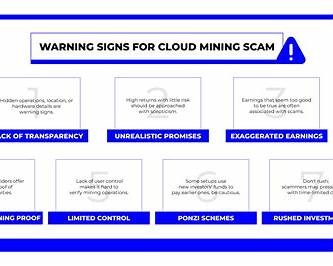
Alt text for image 1: warning signs of blacklisted cloud mining companies
Alt text for image 2: identifying cloud mining scams and fraudulent providers
Conclusion
Blacklisted cloud mining companies share common patterns such as missing hardware evidence, fake dashboards, unrealistic payout guarantees, no pool verification, and hidden ownership. Because cloud mining removes direct control of hardware, buyers must rely on verifiable documentation before committing funds. Real operations demonstrate their equipment, show their connection to recognized pools, explain realistic energy costs, and maintain transparent legal identities. Using illustrative ROI at $0.085/kWh provides a stable baseline for evaluating claims. Evidence based mining operations also rely on proven hardware such as Antminer S19 or S21 units available from BitcoinMinerSales.com, as well as verifiable hosting and colocation through BitcoinMinerSales.com. When providers cannot match these standards, the risk of fraud rises sharply. A structured due diligence process helps protect capital by filtering out blacklisted services and identifying legitimate mining operations.
FAQ
1. How can I identify blacklisted cloud mining companies?
Look for missing hardware evidence, unrealistic payouts, no pool verification, and unverifiable corporate information.
2. Do real cloud mining providers show hardware proof?
Yes, credible providers share serial numbers, facility photos, or video walkthroughs of real ASICs running proof of work.
3. Why do fake providers guarantee fixed profits?
Fraudulent services often promise guaranteed income because they do not rely on real mining, which always varies with conditions.
4. Should a provider offer pool verification?
Yes, pool verification is essential because it confirms active workers and real proof of work output.
5. What power rate should I use when estimating returns?
Use illustrative ROI at $0.085/kWh. Enterprise rates may apply for large buyers, contact BitcoinMinerSales.com.