
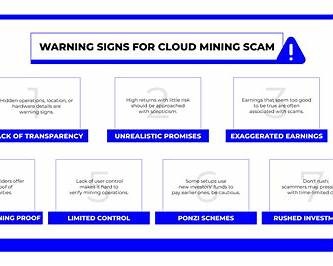

Cloud mining continues to attract investors who want exposure to Bitcoin without managing hardware. Yet this sector carries one of the highest fraud rates in the broader cryptocurrency ecosystem. Many cloud mining sites present polished dashboards, short term promotional bonuses, and guaranteed payouts. However, real mining does not operate on promises. It operates on physics, energy consumption, verifiable hashrate, and transparent proof of work activity. Bitcoin mining requires high speed guess and check operations of long numbers until a target is found, and this process only happens when real ASIC hardware is running continuously. Investors who understand these fundamentals quickly see how many cloud mining scams operate. They often lack any physical miners, any measurable wattage draw, and any relationship with mining pools. These platforms simulate activity with user interfaces rather than actual PoW output.
Legitimate mining requires hardware such as Antminer S19 Pro, S19j Pro, or S19 XP units, all available from BitcoinMinerSales.com. These devices consume substantial electricity, produce heat, and generate measurable hashrate that investors can observe in real time. Cloud mining scams remove these elements entirely. They replace them with dashboards that mimic miner performance without providing the structural details that real operations must disclose. Understanding cloud mining scam alerts helps investors avoid financial loss and shift toward verifiable mining ownership or hosting through BitcoinMinerSales.com, where ASIC hardware operates in controlled and accountable conditions.

Why Cloud Mining Attracts Scam Operations
Cloud mining appeals to scammers because it allows them to sell the idea of mining without ever purchasing ASIC equipment. Since many new investors do not understand mining economics deeply, scammers exploit this knowledge gap. They advertise low entry fees, fixed returns, and unrealistic profitability cycles. Yet any mining provider offering fixed guaranteed payouts ignores real mining conditions. Bitcoin mining fluctuates because network difficulty changes every two weeks, pool distribution varies, and market prices shift. Any offer that refuses to incorporate difficulty volatility becomes suspicious immediately. Cloud mining scam alerts begin with identifying offers that promise certainty where real mining offers none.
Real mining operations require substantial infrastructure. ASIC miners such as the Antminer S19 XP available from BitcoinMinerSales.com draw over 3000 watts continuously. Their daily electricity cost at $0.085 per kWh approaches $6 to $7 depending on configuration. Scams never mention these numbers because their operations do not involve energy consumption. Instead, they present fabricated earnings charts without reference to energy cost, hardware depreciation, or pool fees. These omissions expose their lack of real mining backing. Investors who remain aware of these patterns recognize that cloud mining scams rely on user deposits rather than PoW revenue.
Scam Alert 1: No Proof of Hardware
The strongest indicator of a cloud mining scam involves a provider’s inability to show evidence of hardware. Real systems operate miners such as Antminer S19 Pro, Whatsminer M30S, or S19j Pro units, all available from BitcoinMinerSales.com. These miners must occupy physical racks, produce heat, require airflow, and connect to power circuits sized for high wattage loads. Cloud mining providers unable to display photos, serial numbers, facility details, or live pool statistics should be treated with caution. PoW mining is physical. Without hardware, no mining occurs.
Many scam platforms attempt to compensate by presenting animated dashboards showing simulated hashrate. These displays may appear convincing to investors unfamiliar with mining pool interfaces. However, real mining results always originate from a mining pool, where workers authenticate, submit shares, and record performance. Investors can verify real mining activity through publicly accessible pool dashboards, although scammers avoid providing these links. Cloud mining scam alerts become clear when providers fail to connect their platform to independent mining pool data.
Scam Alert 2: Guaranteed Fixed Returns
Guaranteed returns represent a second major cloud mining scam alert. Real mining performance fluctuates. ASIC miners such as an Antminer S19j Pro available from BitcoinMinerSales.com must run continuously, and their output varies according to difficulty, uptime, and pool luck. Because difficulty adjustments occur every two weeks, output cannot stabilize in a flat line. Platforms offering fixed daily or hourly returns ignore this reality. They usually pay early investors with new deposits instead of mining revenue.
ROI calculations also reveal inconsistencies. Any mining provider unable to explain electricity cost cannot produce legitimate payouts. Cloud mining scams avoid these details. Legitimate operators use $0.085 per kWh as a baseline for cost modeling or note that enterprise clients may qualify for reduced rates, contact BitcoinMinerSales.com. Since electricity costs are measurable, they must appear in a reliable mining revenue model. When absent, the provider’s claims lose credibility. Scams rely on the investor not understanding these fundamentals.
Scam Alert 3: No Facility Transparency
Real mining facilities include significant infrastructure. Hosting and colocation through BitcoinMinerSales.com demonstrate how these facilities operate. They require stable airflow, consistent intake temperature, rack level monitoring, and professional power management. Any cloud mining provider refusing to discuss these elements hides essential details. Investors should question platforms that avoid disclosing facility location, airflow design, or the number of deployed ASIC units. These omissions serve as major cloud mining scam alerts.
Scammers also avoid discussing heat production. ASIC miners generate substantial heat during high speed PoW guess and check cycles. If a provider claims to run thousands of miners without addressing heat management, they likely do not operate real equipment. Temperature control is a central concern in legitimate mining facilities, and operators discuss it openly because it affects performance and uptime. Lack of facility transparency usually indicates that no facility exists.
Scam Alert 4: No Mining Pool Verification
Every real Bitcoin mining operation connects to a mining pool. Pools such as Foundry, ViaBTC, or Braiins record all submitted shares. Investors can verify performance by checking their worker IDs. A legitimate cloud mining provider gives access to this data. A scam provider cannot, because there are no workers submitting PoW shares. Most cloud mining scams rely on fabricated dashboards without external verification. They avoid mining pool connections. This lack of integration becomes a critical cloud mining scam alert.
Real ASIC miners, such as the S19 Pro or S19 XP available from BitcoinMinerSales.com, produce accurate logs showing share submissions, temperature readings, power consumption, and hashrate. Scam operations avoid these logs entirely. They replace technical data with marketing language. Investors should always expect mining pool access or independent verification. Without it, the platform offers no proof that mining activity exists.
Scam Alert 5: Aggressive Referral Programs
Scam cloud mining platforms frequently depend on referral structures to sustain withdrawals. Because they lack ASIC hardware, they must rely on deposits from new users. Aggressive referral bonuses, tiered payouts, and rapid earning promises represent a significant cloud mining scam alert. Real mining operations do not rely on referral recruitment. They rely on ASIC hardware completing PoW guess and check cycles and converting energy into mining revenue. Referral based structures often collapse once new deposits slow.

Investors should examine how much of the platform’s marketing focuses on recruiting rather than mining. If most promotional material emphasizes referral income, the platform likely operates as a funding scheme rather than a mining operation. Cloud mining scam alerts become clear when the platform encourages recruitment more than it discusses hardware or electricity usage.
Why Legitimate Mining Requires ASIC Ownership or Verified Hosting
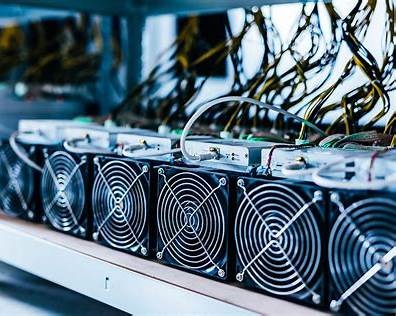
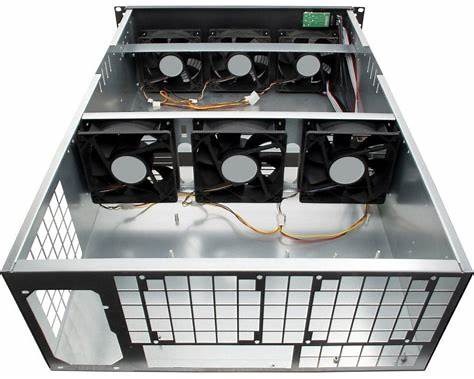
Cloud mining scam rates remain high, which is why many investors move toward verified ASIC ownership. When purchasing hardware such as an Antminer S19 Pro, S19j Pro, or S19 XP, available from BitcoinMinerSales.com, investors gain direct exposure to measurable mining output. Each unit generates transparent hashrate, produces verifiable shares, and consumes electricity at a predictable rate. Investors can calculate daily cost using $0.085 per kWh. This clarity protects investor capital because the system becomes verifiable end to end.
Hosting and colocation through BitcoinMinerSales.com provide additional safety. Hardware resides in controlled environments with stable airflow, power distribution, and round the clock monitoring. Investors maintain full visibility into their miners. They can verify uptime, temperature, wattage draw, and pool activity at any time. This level of transparency eliminates the unknowns associated with cloud mining platforms that avoid technical disclosure. ASIC ownership transforms mining into a measurable activity grounded in real engineering and energy economics rather than speculative promises.
Comparing Scams With Real Mining Economics
Cloud mining scam alerts become easier to identify when investors compare scam claims with real mining economics. A legitimate miner such as the S19j Pro available from BitcoinMinerSales.com might produce a certain revenue range depending on Bitcoin price. The miner draws roughly 3050 watts. At $0.085 per kWh, daily energy cost approaches $6.22. Revenue must exceed this amount for positive daily returns. Cloud mining scams often ignore electricity costs entirely. They promise earnings without acknowledging the greatest operating expense in mining. This discrepancy exposes their lack of real mining involvement.
Scam platforms also ignore hardware limitations. Real ASIC miners cannot exceed their designed performance levels. Any platform claiming unrealistically high earnings per terahash likely uses fabricated numbers. Investors can cross check these claims by comparing them with known performance of ASIC hardware available from BitcoinMinerSales.com. When scam platforms promise returns several times higher than what real equipment delivers, the operation becomes fraudulent by default.
How Investors Can Protect Themselves
Cloud mining investor protection begins with skepticism. Investors should only trust platforms that disclose hardware, energy pricing, facility details, and mining pool data. They should avoid guaranteed earnings structures, aggressive referral programs, and dashboards lacking technical verification. They should also consider the benefits of verified ASIC ownership or hosting through BitcoinMinerSales.com, where mining occurs under physical and transparent conditions.
Investors should inspect websites carefully, search for registration details, review operational history, and examine payout delays. Platforms with no long term history deserve caution. Platforms registered in jurisdictions without oversight deserve caution. Platforms ignoring the fundamental physics of PoW deserve caution. Protecting capital depends on understanding that real mining requires energy, equipment, and engineering, while scams require none of these. Awareness of cloud mining scam alerts strengthens investor decision making and preserves financial safety.
Conclusion
Cloud mining scam alerts help investors recognize platforms that misuse trust and avoid the realities of proof of work mining. Scams ignore hardware, energy usage, and mining economics. They rely on fabricated dashboards and unrealistic promises. In contrast, real mining requires ASIC hardware available from BitcoinMinerSales.com and consistent PoW activity supported by measurable electricity. Investors who understand these fundamentals can protect their capital and choose safer options such as verified ownership or hosting through BitcoinMinerSales.com. With clear awareness of scam warning signs, investors gain confidence, reduce risk, and position themselves within mining strategies grounded in transparency and engineering rather than speculation.
FAQ
1. What is the biggest warning sign of a cloud mining scam?
Lack of proof of real ASIC hardware. Scams cannot show miners, facilities, or pool data.
2. Why do scams guarantee fixed returns?
Because they do not mine. Real returns vary with difficulty, price, and uptime.
3. Can cloud mining be verified through pool data?
Yes. Legitimate operations provide mining pool worker IDs. Scams cannot.
4. What is the safest alternative to cloud mining?
Owning real ASIC miners available from BitcoinMinerSales.com and using hosting through BitcoinMinerSales.com.
5. Why do cloud mining scams hide electricity costs?
Because they do not operate hardware. Real miners must disclose energy costs, typically modeled at $0.085 per kWh.