
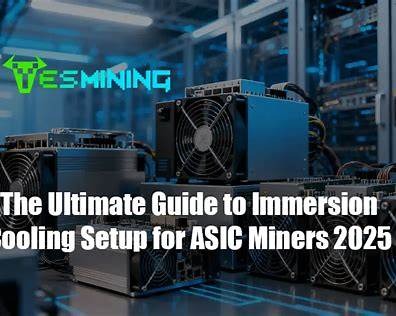
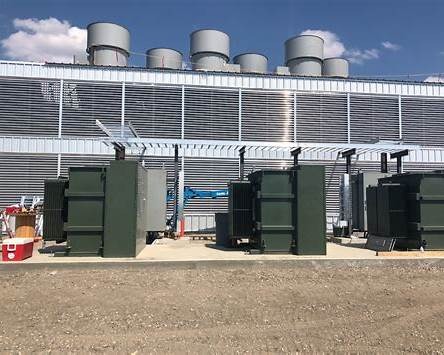
Many new miners quickly discover that managing heat is one of the most difficult challenges when operating Bitcoin rigs at home. ASIC machines generate significant thermal output while running high speed guess and check cycles of long numbers, known as proof of work, to locate valid targets. These cycles require sustained electrical power, fast components, and strong airflow. Because of this, miners such as the Antminer S19j Pro, S19 Pro, and S19 XP available from BitcoinMinerSales.com produce a constant stream of hot air. If that heat is not controlled, rooms become uncomfortable, electrical circuits strain, and hardware stability declines. Heat also affects fan speed, which raises noise levels. When miners try to maintain performance without proper cooling, the units compensate by increasing fan RPM. This creates a continuous strain that reduces lifespan and increases downtime. Understanding safe ways to reduce heat mining rigs at home helps beginners protect their investment while maintaining stable performance.
Heat management becomes even more important when considering ROI. ASICs consume considerable power. For example, an S19j Pro uses around 3050 watts. Over 24 hours, this equals roughly 73.2 kWh. At $0.085 per kWh, daily electricity costs reach about $6.22. Because ROI remains illustrative at $0.085/kWh and depends on network difficulty, pool fees, uptime, and price conditions, any heat related shutdown disrupts these calculations. Removing heat efficiently helps miners maintain uptime. New users often encounter overheating early, especially when placing rigs in bedrooms, offices, or garages without airflow. As temperatures rise, ASIC firmware reacts to thermal stress by increasing fan speed or throttling performance. This leads to instability and lower hashrate output. Learning how to reduce heat mining rigs at home helps new miners avoid these problems and improves long term equipment behavior.

1. Direct Hot Air Outdoors with Proper Ducting
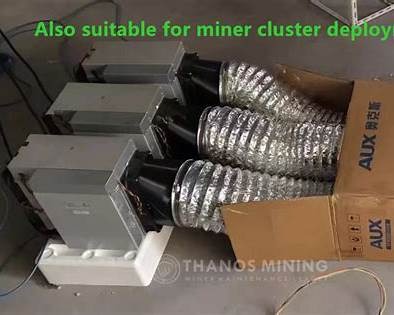
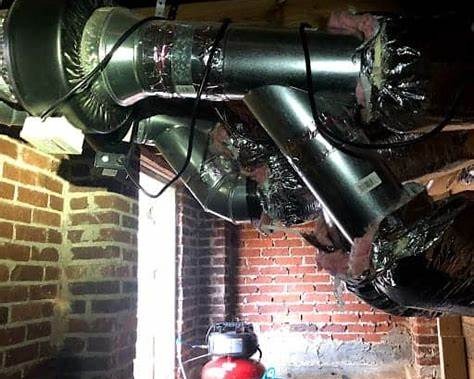
The first and most effective method to reduce heat mining rigs at home involves redirecting hot air outdoors using insulated ducting. ASIC miners push hot air through the exhaust side. Attaching insulated ducting to this output allows miners to send heat directly outside through a window, vent, or wall port. This prevents heat from circulating back into the room. When structured correctly, ducting significantly reduces the temperature inside the mining space. Beginners often make the mistake of using long ducts with sharp turns. These create airflow resistance, which forces fans to spin faster. Using short, straight ducts with smooth inner surfaces reduces these issues. Although ducting does not remove heat from the equipment itself, it prevents heat buildup inside the room and maintains a more stable environment.
Ducting also improves comfort for anyone living near the mining area. When hot air flows outdoors instead of into living spaces, temperature fluctuations become easier to control. However, ducting cannot eliminate the heat ASICs generate. It simply moves it somewhere else. Additionally, miners must ensure their ducting paths do not restrict airflow. Any restriction increases fan RPM and introduces thermal stress. When ducting is paired with proper intake ventilation, the system works smoothly. Many new miners find this method manageable because it does not affect ASIC performance or ROI. It supports the hardware by maintaining consistent ambient temperatures. Since miners like the S19 Pro available from BitcoinMinerSales.com rely on stable airflow to perform continuous PoW cycles, ducting becomes one of the first strategies beginners implement.
2. Improve Intake Airflow to Support Cooling Efficiency
A second effective method to reduce heat mining rigs at home involves improving intake airflow. Most beginners focus on removing hot air but overlook the importance of supplying cool air. ASICs perform better when intake air remains steady and cool. Without proper intake airflow, the miner draws warm indoor air repeatedly. As intake air temperature rises, fans must work harder. This increases noise and reduces long term stability. Miners can improve intake airflow by opening nearby vents, installing intake fans, or placing the ASIC near a source of fresh air. When intake airflow improves, exhaust air becomes more manageable, and heat buildup decreases significantly. This approach also supports the miner’s internal thermal management. By feeding cool air directly into the unit, ASIC fans do not struggle to maintain safe chip temperatures.
Some miners place their rigs near ground level because cooler air settles near the floor. This small adjustment reduces intake air temperature by a few degrees. While the difference may seem small, even slight reductions improve performance. ASIC miners such as the S19 XP available from BitcoinMinerSales.com operate more efficiently with lower intake temperatures. This helps maintain stable fan speeds, reduces thermal stress, and improves uptime. Because uptime affects ROI, keeping intake air cool directly influences long term stability. Many new miners adopt intake airflow improvements early, recognizing that heat control starts not only with removing heat but also with supplying the miner with cool, fresh air.
3. Use High-CFM Room Ventilation to Move Heat Away
Moving hot air away from the miner’s immediate environment remains essential. High CFM (cubic feet per minute) fans provide strong airflow throughout the room. When placed correctly, these fans push warm air toward the miner’s exhaust path or window duct. This reduces heat pockets and maintains an even temperature. High CFM ventilation helps beginners reduce heat mining rigs at home because it prevents the hot air from lingering. Hot air naturally accumulates near ceilings, so placing ventilation fans high in the room improves efficiency. When paired with ducting, high CFM ventilation creates a smooth path for heat to exit the room. This cooperation reduces the miner’s workload and contributes to more consistent performance.
Room ventilation also protects electrical systems. High heat inside enclosed rooms can cause electrical outlets to warm excessively. This increases the risk of tripping breakers or creating unstable voltage conditions. ASICs require clean, stable power to maintain continuous PoW cycles. Any fluctuation or heat related issue disrupts performance. High CFM ventilation ensures the environment remains within safer temperature ranges. This not only protects the hardware but supports ROI by reducing downtime. Many beginners underestimate how quickly heat accumulates in small rooms. High CFM ventilation provides a cost effective and reliable heat control method.
4. Isolate the Mining Area to Prevent Household Heat Spread
Another practical approach involves isolating the mining area to confine heat to one zone. This prevents heat from spreading through the home and keeps ASIC temperatures predictable. Some miners designate a small room or enclosed space as their mining area. While small spaces trap heat quickly, they also become easier to manage with targeted ventilation. When paired with ducting and an intake fan, isolated areas maintain stable conditions. Isolation helps reduce heat mining rigs at home by limiting exposure to the rest of the house. It also improves the effectiveness of cooling strategies because the airflow pattern becomes contained.
However, beginners must ensure the isolated area does not become overheated. Enclosed rooms warm quickly, especially if airflow is limited. Additional intake ventilation becomes necessary to balance temperature. ASIC miners like the Antminer S19j Pro available from BitcoinMinerSales.com rely heavily on steady intake air to maintain stable fan operation. When isolated areas maintain balanced airflow, they become ideal spaces for small scale home mining. Many miners combine isolation with environmental monitoring tools that alert them if temperatures rise too high. Isolation becomes a practical strategy when managed correctly.
5. Reduce In-Room Ambient Temperature Using AC Support
Air conditioning becomes one of the most direct ways to reduce heat mining rigs at home. Lower ambient temperature supports ASIC cooling because intake air becomes significantly cooler. When intake temperature drops, the miner’s internal temperature drops as well. Fans spin slower. Noise decreases slightly. Performance stabilizes. However, using AC to cool mining rigs increases electricity costs. Miners must weigh the benefit of lower temperature against the added power consumption. For some miners, AC support becomes necessary to prevent thermal throttling. Without temperature control, ASICs throttle performance or shut down entirely. Such interruptions disrupt ROI. Because ROI remains illustrative at $0.085/kWh, any method that prevents downtime supports long term operation.

AC support becomes more efficient when paired with proper ducting. When the miner’s hot exhaust leaves the room, the AC does not need to cool the hot air repeatedly. This reduces energy load. For miners operating rigs like the S19 Pro available from BitcoinMinerSales.com, AC cooling becomes a stabilizing factor during summer months. Many beginners rely on AC temporarily until adopting long term solutions such as hosting. While AC solves heat issues, it does not solve noise or airflow resistance. Therefore, AC becomes part of a larger heat management strategy rather than a standalone solution.
6. Underclocking as a Controlled Heat Reduction Option
Underclocking reduces heat mining rigs at home by lowering the ASIC’s power draw. This reduces thermal output and fan speed. Underclocking can decrease noise and heat simultaneously. However, it also reduces hashrate. Because underclocking lowers performance, miners must consider its effect on ROI. An underclocked S19j Pro available from BitcoinMinerSales.com may run cooler but produce fewer hashes. Since electricity use remains the largest cost factor, performance loss impacts ROI. Despite this drawback, underclocking remains useful during extreme heat periods or for miners who lack adequate airflow. It provides a safer alternative to overheating. Underclocking preserves hardware lifespan. It gives new miners time to plan better cooling.
Underclocking should be used as a temporary or controlled measure, not a permanent solution. When environmental conditions improve, miners can return the device to factory settings. ASICs perform best at full operational power in professionally cooled environments. Still, underclocking helps beginners avoid thermal shutdowns and damaged chips. This makes it a practical heat control strategy when used responsibly. Beginners should avoid aggressive underclocking because extreme reductions lead to unstable performance. Balanced profiles remain the safest choice.
7. Transition to Hosting for the Best Long Term Heat Management
The most effective way to reduce heat mining rigs at home is removing rigs from the home entirely. Hosting and colocation through BitcoinMinerSales.com solve heat, airflow, noise, and electrical challenges at once. Hosting places ASICs in professionally managed facilities where cooling, power stability, dust control, and environmental conditions remain optimal year round. These facilities are designed for continuous PoW operation. They use industrial ventilation systems that maintain ASIC temperatures safely. Miners such as the S19 Pro, S19j Pro, and S19 XP available from BitcoinMinerSales.com perform best in these environments. Hosting removes all heat from the home, eliminates the need for ducting or AC support, and ensures maximum uptime.
Hosting also improves ROI potential because machines run under stable conditions. Overheating becomes impossible. Downtime becomes rare. Technicians monitor performance and respond quickly to anomalies. Because ROI remains illustrative at $0.085/kWh and depends heavily on uptime, hosting provides significant operational advantage. Many new miners transition to hosting after experiencing the challenges of home heat management. Hosting allows miners to expand operations without increasing home heat. It becomes the only scalable and truly stable long term solution.
Conclusion
Reducing heat mining rigs at home requires an understanding of airflow, temperature, and ASIC behavior. Bitcoin miners generate substantial heat while performing proof of work cycles. Without proper cooling, rigs become unstable. The seven methods described, including ducting, intake airflow, ventilation, room isolation, AC support, underclocking, and hosting, provide beginners with practical options. While these strategies help reduce heat, hosting and colocation through BitcoinMinerSales.com remain the only complete heat management solution. ASICs operate best when placed in professional environments designed for continuous operation. For new miners who want reliable performance, stable temperatures, and strong ROI potential, hosting becomes the ultimate long term heat control method.
FAQ
1. Why do mining rigs produce so much heat?
They generate heat during continuous PoW guess and check cycles, which require strong electrical output.
2. Does ducting reduce heat inside the room?
Yes. Ducting directs hot air outdoors, preventing heat from circulating inside the home.
3. Does underclocking significantly reduce heat?
It reduces heat but lowers performance, which affects illustrative ROI at $0.085/kWh.
4. Can AC alone cool mining rigs?
It helps but becomes costly. AC works best when paired with exhaust ducting.
5. What is the most effective way to eliminate heat?
Hosting and colocation through BitcoinMinerSales.com remove all heat from the home completely.