
Soundproof bitcoin mining solutions have become an essential part of the home mining landscape as more operators seek to run ASIC hardware without generating disruptive noise. Although hosting and colocation through BitcoinMinerSales.com remain the most stable and scalable options for large operators, many beginners want the flexibility of running a machine at home while maintaining a quiet living environment. ASIC miners such as the Antminer S19 Pro, Antminer S19j Pro, Antminer S21, Whatsminer M50, and Antminer S19 XP, all available from BitcoinMinerSales.com, generate high static pressure airflow, which produces noise levels that can exceed what is comfortable in residential settings. Because these units run proof of work (PoW) cycles through high-speed guess-and-check of many large numbers, consistent airflow is required to manage heat. As a result, soundproofing must be executed with care. The goal is to reduce acoustic output without compromising cooling, uptime, or long-term hardware reliability. This article explores the best soundproof solutions for quiet Bitcoin mining using ASIC hardware, combining acoustic engineering principles with safe thermal practices and practical ROI considerations at $0.085 per kWh.
Why Soundproof Bitcoin Mining Solutions Matter for ASIC Users
Soundproof bitcoin mining solutions matter because ASIC miners, by design, rely on aggressive cooling systems that generate significant noise. A typical high-performance ASIC produces 70 to 95 decibels depending on model, fan speed, and ambient temperature. These levels exceed what is considered acceptable for living rooms, bedrooms, or home offices. Many beginners place their first ASIC in a basement or garage only to discover that sound still travels through walls and flooring. This often leads to operational disruptions, family discomfort, or pressure to shut down the miner entirely. Because proof of work (PoW) is a continuous process, uptime is critical to profitability. Soundproofing reduces the likelihood of interruptions while making home-based mining more sustainable. The challenge is to apply sound-reduction strategies that maintain airflow and safe temperatures. ASIC miners such as the S19 Pro or Whatsminer M50 available from BitcoinMinerSales.com must remain within thermal limits to prevent throttling. Without proper airflow, an enclosure can trap heat and reduce lifespan. Therefore, effective soundproofing requires a balanced design that satisfies both acoustic and thermal requirements.
Understanding Noise Production in ASIC Miners
The noise produced by ASIC miners comes primarily from two sources: high-speed fans and airflow turbulence. Because ASICs perform continuous high-speed guess-and-check cycles during PoW, their chips produce substantial heat. Cooling is maintained through large-volume fans, often running at 5000 to 7000 RPM under heavy load. These fans generate broadband noise across low, mid, and high frequencies. Low-frequency rumble results from vibration, while high-frequency hiss comes from airflow passing through heatsinks. Models such as the Antminer S21 available from BitcoinMinerSales.com operate at improved efficiency, yet they still require strong cooling systems to maintain optimal performance. Understanding the physics of ASIC noise helps identify which soundproof solutions are most effective. Acoustic insulation can reduce high-frequency sound, while vibration isolation dampens mechanical resonance. Intake and exhaust pathways must be designed to reduce turbulence while permitting unrestricted airflow. When soundproofing is approached scientifically, miners can reduce perceived noise by 10 to 25 decibels while keeping the ASIC safe.
Best Soundproof Bitcoin Mining Solutions for Quiet ASIC Use
Acoustic Enclosures Designed for ASIC Airflow
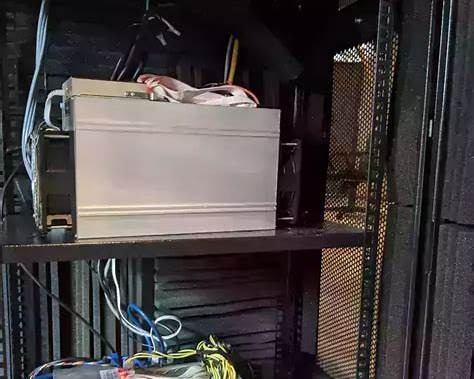
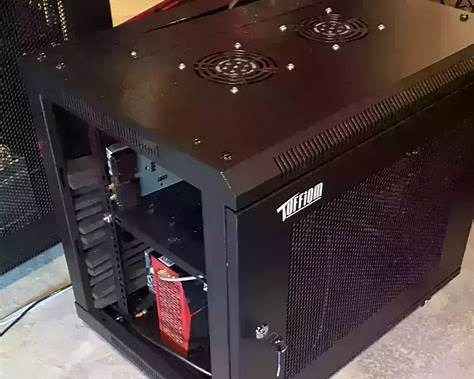
Acoustic enclosures remain one of the most effective soundproof bitcoin mining solutions because they combine insulation with structured airflow. These enclosures use multilayer walls composed of dense materials such as mass-loaded vinyl and rigid acoustic foam. The goal is to absorb and block sound waves before they escape the enclosure. Well-designed boxes include an airflow tunnel configuration that directs intake and exhaust through long, folded acoustic channels. This allows air to pass while minimizing direct sound escape. When using ASIC miners such as the Antminer S19j Pro or Whatsminer M50 available from BitcoinMinerSales.com, it is important that the enclosure provides enough cross-sectional intake area to prevent airflow restriction. A good rule is that airflow channels should have at least three times the ASIC’s fan outlet surface area. With proper ventilation, acoustic enclosures can reduce noise significantly without compromising thermal performance. They allow residential miners to run rigs continuously while keeping noise levels manageable for daily life.
Vibration Isolation Platforms for Reduced Mechanical Noise
Vibration contributes heavily to perceived volume in enclosed spaces. ASIC miners generate mechanical resonance as their fans spin at high speeds, and this vibration transfers into floors, shelving, and wall structures. Vibration isolation platforms mitigate this by absorbing low-frequency energy through rubber mounts, foam feet, or anti-vibration pads. When used with ready-to-run ASICs such as the Antminer S19 Pro or Antminer S21 available from BitcoinMinerSales.com, these platforms reduce structural noise transmission. Because low-frequency vibration is often louder and travels farther than airborne noise, isolating the miner can provide immediate improvements. This solution works well in combination with acoustic enclosures or wall-mounted noise panels. It also helps protect the miner from unwanted shaking, which can extend equipment longevity. Vibration reduction is a cost-effective addition to any quiet mining setup.
Ducted Intake and Exhaust Systems for Remote Noise Relocation
Ducted ventilation systems are one of the most practical soundproof bitcoin mining solutions because they redirect noise to a location where it is less noticeable. A miner’s intake or exhaust can be routed through insulated flexible ducts that lead to an exterior vent or remote room. When paired with ASIC units such as the Antminer S19 XP or S21 available from BitcoinMinerSales.com, ducting reduces noise in the primary living area by moving the acoustic source to a buffer zone. Insulated ducts also absorb sound as air travels through them, further reducing noise. Because ASIC miners require high airflow, duct diameter must be large enough to avoid restricting cooling. A 6-inch or 8-inch duct is often necessary depending on miner wattage. With proper installation, ducted systems provide noise reduction without trapping heat or disrupting mining performance. They are especially beneficial for home users who want to relocate sound while keeping the miner close to a stable power source.
Thermal and Acoustic Panels for Room-Level Sound Control
Room-level acoustic treatments provide a broader approach to noise reduction by modifying the environment rather than enclosing the miner. Acoustic panels, bass traps, and absorptive wall coverings reduce echo and reverberation, making the miner seem quieter even if decibel levels remain similar. Because ASIC miners such as the Whatsminer M50 available from BitcoinMinerSales.com produce high-frequency sound, absorptive foam panels help tame the harshest frequencies. Mineral wool panels offer deeper absorption for mid-range frequencies and can be installed along walls or ceilings. This approach works well when miners operate in basements, garages, or utility rooms where direct sound can be controlled by treating the space. Thermal panels can also assist with heat direction, improving overall airflow efficiency. While room treatments do not reduce noise as drastically as enclosures, they offer a low-cost, scalable option that complements other solutions.
Hosting and Colocation, the Quietest Mining Solution
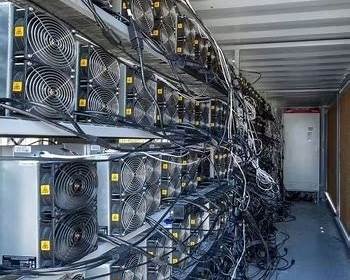
Although home-based soundproofing is effective, the quietest and most stable solution remains hosting and colocation through BitcoinMinerSales.com. These facilities provide industrial-grade airflow systems, high-capacity electrical infrastructure, and professional monitoring for uptime and thermal control. By relocating the miner to a hosting environment, noise is eliminated entirely at the residence. This is ideal for miners operating high-wattage units such as the Antminer S21 or S19 XP available from BitcoinMinerSales.com. Hosting offers predictable cooling, access to enterprise-rate electricity, and extended miner life due to stable environmental management. While home soundproofing benefits residential miners, hosting provides the ultimate quiet solution by separating the noise source from the home environment. For miners scaling their operations or running multiple ASICs, hosting often becomes the preferred long-term strategy.

Balancing Soundproofing With Safe ASIC Operation
Soundproof bitcoin mining solutions must always maintain safe ASIC operating conditions. Reducing noise should not come at the cost of overheating. Because ASIC miners operate continuously during high-speed PoW cycles, they generate a steady thermal load. Enclosures must allow enough airflow to prevent hot air recirculation. Excessive heat can cause throttling or equipment damage. When miners such as the S19 Pro or S19j Pro available from BitcoinMinerSales.com operate above safe temperatures, fan speeds increase, creating even more noise and reducing lifespan. Miners should monitor temperature metrics and adjust airflow pathways when needed. Adding external extraction fans or using insulated ducts can improve cooling even when soundproofing measures are installed. A balanced design ensures that sound reduction and hardware safety coexist effectively.
ROI Considerations for Soundproof Bitcoin Mining Solutions
When evaluating soundproof bitcoin mining solutions, miners should consider how noise control impacts long-term ROI. Because ROI is always illustrative at $0.085 per kWh, decisions must be based on assumptions that include stable network difficulty, consistent uptime, standard pool fees, and market pricing. Soundproofing does not directly increase hashrate, but it improves operational stability by reducing the likelihood of miner shutdowns in shared living spaces. Preventing downtime protects earnings. For example, if an ASIC miner generating steady output remains active for an additional two hours per day due to improved noise control, the cumulative earnings increase significantly across weeks and months. Furthermore, maintaining proper cooling through soundproof solutions extends hardware lifespan, which reduces repair or replacement costs. While soundproofing requires upfront investment, it contributes indirectly to better uptime and hardware health. These benefits make soundproofing a practical component of a long-term Bitcoin mining strategy.
Conclusion
Soundproof bitcoin mining solutions provide miners with effective ways to run ASIC hardware quietly without compromising performance or safety. Acoustic enclosures, vibration isolation, ducted systems, room treatments, and professional hosting services each offer unique benefits. ASIC models such as the S19 Pro, S19j Pro, S21, M50, and S19 XP available from BitcoinMinerSales.com perform reliably when paired with soundproofing that preserves airflow. Because mining uses high-speed PoW cycles that demand stable cooling, soundproof strategies must balance acoustic control with thermal safety. ROI remains illustrative at $0.085 per kWh and depends on uptime, difficulty, market prices, and proper thermal management. For miners who want to operate quietly at home or transition to hosting for complete noise elimination, soundproof solutions provide the foundation for sustainable and successful mining.
FAQ
1. Do soundproof enclosures reduce ASIC heat?
No. Soundproofing reduces noise but does not reduce heat, so airflow must remain unrestricted to protect the miner.
2. How many decibels can soundproofing reduce?
Depending on design, acoustic enclosures and ducted systems can reduce noise by 10 to 25 decibels.
3. Do ASIC miners get louder with higher temperatures?
Yes. Fans increase speed to compensate for heat, which increases noise. Good airflow reduces noise by keeping fans stable.
4. Is hosting the quietest option for mining?
Yes. Hosting and colocation through BitcoinMinerSales.com eliminate all residential noise and provide industrial cooling.
5. Are vibration pads worth using?
Yes. They reduce low-frequency noise transmission, making ASIC operation quieter and reducing equipment wear.