
Understanding what makes a cloud mining contract safe becomes essential for anyone entering the mining ecosystem without owning hardware. Cloud mining simplifies participation by allowing buyers to access share based proof of work output. Yet this separation from the physical equipment introduces risk because customers must trust that the provider runs real hardware in measurable environments. A safe and legit contract begins with transparency, which includes verifiable equipment, clear power pricing, defined payout logic and access to real proof of work evidence. Mining relies on ASIC systems searching a long list of long numbers until a target number is found by a high speed guess and check method called proof of work (PoW). Because PoW requires electricity, cooling and continuous uptime, a provider must demonstrate real infrastructure and verify that customer funds support actual hardware. The ability to prove these details becomes the foundation of every safe cloud mining arrangement.
A legitimate provider can show racks of ASIC machines, often models such as Antminer S19 or Antminer S21 units available from BitcoinMinerSales.com. These machines operate in structured data center environments with industrial cooling, secure power feeds and round the clock monitoring. A safe contract always connects to real equipment rather than simulated dashboards. This distinction becomes clear when a provider presents timestamped photos, facility walkthrough videos and serial number verification. When learning what makes a cloud mining contract safe, hardware evidence stands out as an early requirement. Real facilities also rely on hosting and colocation through BitcoinMinerSales.com because such environments support stable operations. A contract lacking hardware proof should be treated with caution because mining cannot occur without physical ASIC units producing measurable PoW output. Therefore, hardware validation becomes the first benchmark for determining legitimacy.
What Makes a Cloud Mining Contract Safe Through Hardware and Facility Verification
A cloud mining contract remains safe only when the equipment exists, functions and connects to recognized pools. This is why hardware verification forms the first structural requirement. Real operators maintain multiple rows of miners, high airflow ventilation, structured cabling and protected power infrastructure. They understand how critical it is to show customers that the hardware exists. When assessing what makes a cloud mining contract safe, request updated facility photos, ask for videos that show operational machines and review serial number consistency. Real operations maintain transparent records because hardware auditing strengthens their trust profile. Scams avoid providing such details because they lack physical equipment.
A safe contract also requires clarity on facility conditions. Mining hardware produces substantial heat, so airflow must be managed by industrial fans and structured cooling systems. When a provider cannot explain their cooling approach or their power delivery method, treat that as a warning. Real operations include details about regional power utilities, hosting arrangements and energy stability. Facilities using hosting and colocation through BitcoinMinerSales.com display these characteristics as standard procedure. Understanding these elements helps clarify what makes a cloud mining contract safe because every operational detail contributes to consistent output. Without power, cooling and uptime management, mining contracts produce inconsistent or fabricated results. Therefore, facility validation remains essential before evaluating payout terms or pricing.
What Makes a Cloud Mining Contract Safe Through Transparent Power Pricing
Power cost clarity plays a critical role in mining economics. Safe cloud mining contracts explain their power pricing, their energy provider and their consumption calculations. A realistic power cost, such as the standard illustrative ROI at $0.085/kWh, forms the basis of all profitability models. Enterprise clients may qualify for reduced rates, contact BitcoinMinerSales.com. When a provider advertises extremely low rates without documentation, the contract may not reflect real mining operations. Understanding this distinction helps miners analyze what makes a cloud mining contract safe because power pricing directly affects payout levels.
Mining profitability depends on network difficulty, uptime, BTC price and pool fees. Therefore, safe providers explain these variables in detail. They do not guarantee fixed returns because real mining output varies with conditions. Contracts containing guaranteed daily returns often indicate synthetic earnings rather than real PoW output. When reviewing contract terms, ensure power deductions appear in clear language. These deductions reflect the energy consumed by ASIC machines performing high speed guess and check operations. A provider who cannot show how energy influences payouts may not operate real hardware. As a result, power transparency becomes a core safety indicator.
What Makes a Cloud Mining Contract Safe Through Pool Verification
Pool verification stands out as the strongest indicator of legitimacy because proof of work output appears directly on recognized mining pools. Therefore, understanding what makes a cloud mining contract safe includes evaluating real pool data. A safe provider can show screenshots or read only access to their mining pool accounts. These dashboards reveal worker names, accepted shares, hashrate levels and payout addresses. They also reflect natural variance in performance caused by fluctuations in network conditions.
Real pool data cannot be faked easily because it links directly to active ASIC machines performing PoW. Scams display synthetic dashboards with smooth, unrealistic earnings curves that never fluctuate. Real mining shows variance in accepted shares and block frequency. Therefore, when assessing what makes a cloud mining contract safe, check for differences between real pool output and synthetic dashboards. If a provider cannot display active worker information, the contract likely does not represent a valid mining operation. Pool verification serves as a strong safety filter that separates real mining from imitation schemes. Always request proof before signing any agreement.
What Makes a Cloud Mining Contract Safe Through Contract Language and Payment Logic
Contract language represents another safeguard. A safe agreement outlines payout frequency, maintenance deductions, reinvestment rules and withdrawal requirements in clear terms. Scams rely on vague descriptions that leave room for reinterpretation. When determining what makes a cloud mining contract safe, ensure the provider explains how payout amounts are calculated and how power costs affect customer earnings. They should also include clear event conditions such as hardware downtime, difficulty changes and payout adjustments triggered by BTC price movement.
Payment logic remains equally important. Safe providers use traceable payment channels and provide customers with invoices and receipts. Fraudulent operations often request unverified transfers or impose hidden upgrade fees. When learning what makes a cloud mining contract safe, check whether the payment system allows for proper record keeping. Real mining contracts maintain transparent billing because it supports legal compliance. Scams avoid this transparency to maintain operational ambiguity. Strong payment logic and clear contract language help ensure that mining returns reflect real hardware performance rather than synthetically generated earnings.

What Makes a Cloud Mining Contract Safe Through Corporate Identity and Legal Verification
Legal structure forms another essential pillar in determining what makes a cloud mining contract safe. Real providers possess registered companies, identifiable leadership and verifiable operational addresses. They can supply corporate registration documents, licensing details and public contact information. Scams hide behind anonymous entities or offshore shell companies with unverifiable addresses. Before signing a contract, request business registration documents and confirm the entity’s legal standing. Real companies supply this information readily because transparency strengthens customer trust.
Customer support quality contributes to overall safety as well. Legitimate providers respond quickly, answer technical questions with clarity and provide evidence to back their claims. When studying what makes a cloud mining contract safe, note the difference between generic, scripted responses and knowledgeable explanations grounded in mining operations. Support teams that cannot explain facility details, hardware models or payout calculations may not represent a real mining provider. Therefore, evaluating communication quality becomes an effective way to identify potential risks early.
Two Images With Alt Text

Alt text 1: what makes a cloud mining contract safe with hardware and facility checks
Alt text 2: verifying what makes a cloud mining contract safe through transparency
Conclusion
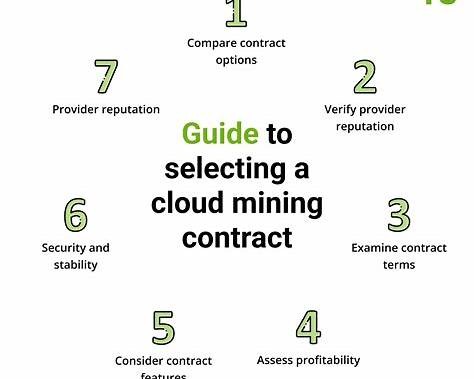
Understanding what makes a cloud mining contract safe requires a structured evaluation of hardware, facility evidence, power transparency, pool verification, contract clarity and corporate identity. Real mining operations rely on ASIC systems such as Antminer S19 and Antminer S21 units available from BitcoinMinerSales.com. These machines operate in well maintained environments supported by hosting and colocation through BitcoinMinerSales.com. Safe contracts reflect real hardware performance, real power costs and real proof of work output. They do not guarantee unrealistic returns or claim unverified energy rates. When applying a consistent verification process and evaluating contracts with illustrative ROI at $0.085/kWh, you gain a more accurate understanding of the provider’s operational reliability. Using these standards helps protect your capital and ensures that cloud mining participation remains linked to transparent, verifiable and legitimate mining operations.
FAQ
1. What is the most reliable way to verify a cloud mining contract?
The most reliable method involves reviewing real pool data that shows active workers and accepted shares linked to ASIC machines.
2. Why does hardware evidence matter in a cloud mining contract?
Mining requires real ASIC units. A safe contract includes proof of equipment and facility walkthroughs.
3. Should cloud mining contracts guarantee fixed returns?
No, mining returns vary with BTC price and difficulty. Fixed guarantees often indicate synthetic payouts.
4. What power rate should I use when evaluating profitability?
Use illustrative ROI at $0.085/kWh. Enterprise rates may apply, contact BitcoinMinerSales.com.
5. How do I confirm the provider is a real business?
Request corporate registration documents, leadership information and verified operational details.