
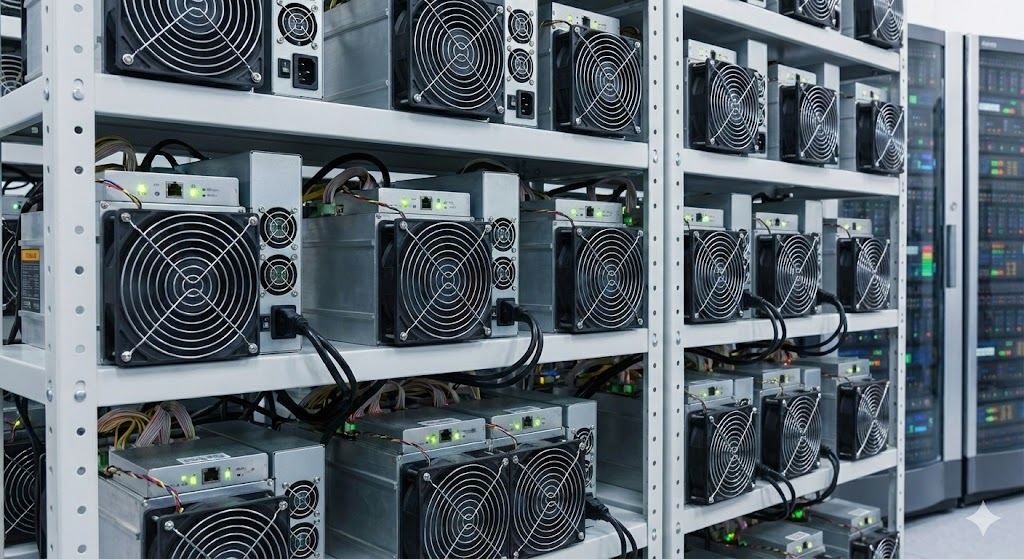
Bitcoin Mining Rack: What It Is, Why It Matters, and How It’s Used
A bitcoin mining rack is one of the least glamorous parts of mining, yet it is one of the most important. New miners often focus on hash rate, electricity costs, and profitability calculators. Physical infrastructure comes later, usually after problems appear. Overheating, cable chaos, vibration, and maintenance headaches often trace back to one overlooked decision, poor racking.
At its core, a bitcoin mining rack is a structural system designed to hold, organize, and support mining hardware. It is not just a shelf. It is part of the cooling system, the electrical layout, and the long-term reliability of the operation. Whether you are running two miners in a garage or hundreds in a warehouse, the rack determines how efficiently everything works together.

Mining hardware runs continuously. Heat output is constant. Fans vibrate. Cables carry high electrical loads. A proper rack absorbs and organizes these stresses. A bad rack amplifies them. Understanding this difference is critical for anyone planning to mine beyond a short experiment.
What a Bitcoin Mining Rack Actually Does
A bitcoin mining rack provides physical structure, but its role goes far beyond holding machines off the floor. It defines airflow direction, spacing between miners, access for maintenance, and safe routing for power and networking cables. In many ways, the rack becomes part of the cooling system.
ASIC miners pull air in from one side and exhaust hot air from the other. A good rack aligns all miners in the same orientation. This allows hot air to move away from intake areas rather than recirculating. When miners are placed randomly on shelves or stacked improperly, hot exhaust air often feeds directly into neighboring units. Temperatures rise, fan speeds increase, and noise and wear follow.
A well-designed bitcoin mining rack also reduces vibration. ASIC miners vibrate constantly due to high-speed fans. If that vibration transfers into floors or walls, noise increases and structural wear accelerates. Racks designed for mining are built to handle continuous vibration without loosening or flexing over time.
Common Types of Bitcoin Mining Racks
Bitcoin mining racks generally fall into three broad categories. Each serves a different type of operation and budget.
Open-frame racks are the most common. They are typically made of steel or aluminum and have no doors or side panels. This design maximizes airflow and makes maintenance easy. Open-frame racks are ideal for warehouses, garages, and dedicated mining rooms where noise is not a concern.
Enclosed racks resemble traditional server cabinets. They include doors and side panels and sometimes integrated airflow management. These racks can help control dust and direct airflow, but they require careful cooling design. Without proper ventilation, enclosed racks trap heat quickly.
Custom-built racks are common among small-scale miners. Some use industrial shelving, metal frames, or even modified storage racks. While this approach can reduce upfront cost, it often creates airflow and safety issues if not planned carefully. A custom bitcoin mining rack must prioritize ventilation, stability, and cable management to be viable long term.
Rack Size, Density, and Spacing
Rack capacity is not just about how many miners fit. It is about how many miners can run safely and efficiently at the same time. Overcrowding is one of the most common mistakes miners make.
ASIC miners need space for airflow. Even a few centimeters of additional clearance can reduce recirculation and lower fan speeds. When miners are packed too tightly, temperatures climb, fans run louder, and hardware lifespan shortens.
A typical bitcoin mining rack might hold anywhere from 6 to 24 miners, depending on rack width, shelf depth, and miner model. Vertical spacing also matters. Heat rises, so upper shelves often run hotter. Good rack designs account for this by balancing load and airflow across levels.
Cooling and Airflow Integration
Cooling is inseparable from rack design. The rack determines how air moves through the space. In professional setups, racks are aligned into hot aisle and cold aisle configurations. Cold air enters from one side. Hot air exits from the other.
Even in small setups, basic airflow principles apply. Intake sides should face cooler air sources. Exhaust sides should face open space or ducting. Blocking exhaust airflow with walls or other racks increases noise and heat stress.
Some miners integrate ducting directly into their bitcoin mining rack setup. Exhaust air is captured and vented outside. This reduces ambient temperature and stabilizes fan speeds. While simple in concept, ducting must be sized correctly to avoid back pressure.
Power Distribution and Safety
Mining racks also organize power delivery. ASIC miners draw significant current. Loose cables, overloaded power strips, and tangled cords create real fire risk.
Professional racks often include mounted power distribution units. Cables are routed cleanly, secured away from airflow paths, and labeled for maintenance. This reduces accidental disconnections and makes troubleshooting easier.
Grounding is another consideration. Metal racks should be properly grounded to reduce electrical risk. This is especially important in humid environments or locations with unstable power.
Noise and Vibration Considerations
While racks do not eliminate noise, they influence how sound travels. Rigid racks that sit directly on concrete can transmit vibration through floors and walls. Adding vibration isolation pads under rack feet can significantly reduce perceived noise.

Rack placement also matters. Placing racks against shared walls amplifies noise transmission. Leaving space between racks and walls reduces resonance.
For miners concerned about noise, rack design is one of several tools used alongside enclosures, ducting, and placement strategy.
Home Mining vs Industrial Racks
Home miners often underestimate the importance of proper racking. Placing miners on the floor or improvised shelves may work briefly, but problems appear quickly. Dust accumulates. Cables tangle. Airflow suffers.
A small bitcoin mining rack in a home setup improves organization and safety, even if only a few miners are involved. However, noise and heat limitations still apply. Racks do not change the fundamental challenge of residential mining.
Industrial operations rely on racks for scalability. When dozens or hundreds of miners are deployed, racks allow predictable expansion. New units can be added without redesigning the entire layout. Maintenance procedures become repeatable rather than improvised.
Cost and Long-Term Value
The cost of a bitcoin mining rack varies widely. Simple open-frame racks may cost a few hundred dollars. Heavy-duty industrial racks cost more. Custom solutions vary depending on materials and labor.
While racks do not directly increase hash rate, they protect investment. Better cooling improves efficiency. Reduced vibration extends hardware life. Organized layouts reduce downtime.
Over time, these factors affect profitability more than many miners expect.
Common Mistakes With Mining Racks
Several mistakes appear repeatedly among new miners. Overcrowding is the most common. Ignoring airflow direction is another. Using weak shelving that flexes under vibration creates long-term issues.
Poor cable management increases both heat and risk. Placing racks in confined spaces without exhaust planning leads to thermal runaway.
These mistakes are not technical failures. They are planning failures.
The Role of Racks in Scalable Mining
As mining becomes more competitive, efficiency matters at every level. Racks are part of that efficiency. They support cooling, power delivery, maintenance workflows, and expansion planning.
Mining is not just about machines. It is about systems. The rack is where those systems meet physically.
Conclusion
A bitcoin mining rack is far more than a piece of metal holding machines. It is a foundational component of safe, efficient, and scalable mining operations. Proper racking improves airflow, reduces noise and vibration, simplifies maintenance, and protects expensive hardware. Whether mining at home or operating at scale, investing thought into rack design pays dividends over time. In mining, structure supports performance, and the rack is where that structure begins.
FAQ
1. What is a bitcoin mining rack used for?
It holds and organizes mining hardware while supporting airflow, power routing, and maintenance.
2. Can I build my own bitcoin mining rack?
Yes, but airflow, stability, and safety must be carefully planned.
3. Do mining racks reduce electricity usage?
They do not reduce power use directly, but better cooling improves efficiency.
4. Are server racks suitable for bitcoin mining?
Some are, but many mining operations prefer open-frame racks for airflow.
5. How many miners fit on one rack?
It depends on rack size and miner model, typically between 6 and 24 units.