
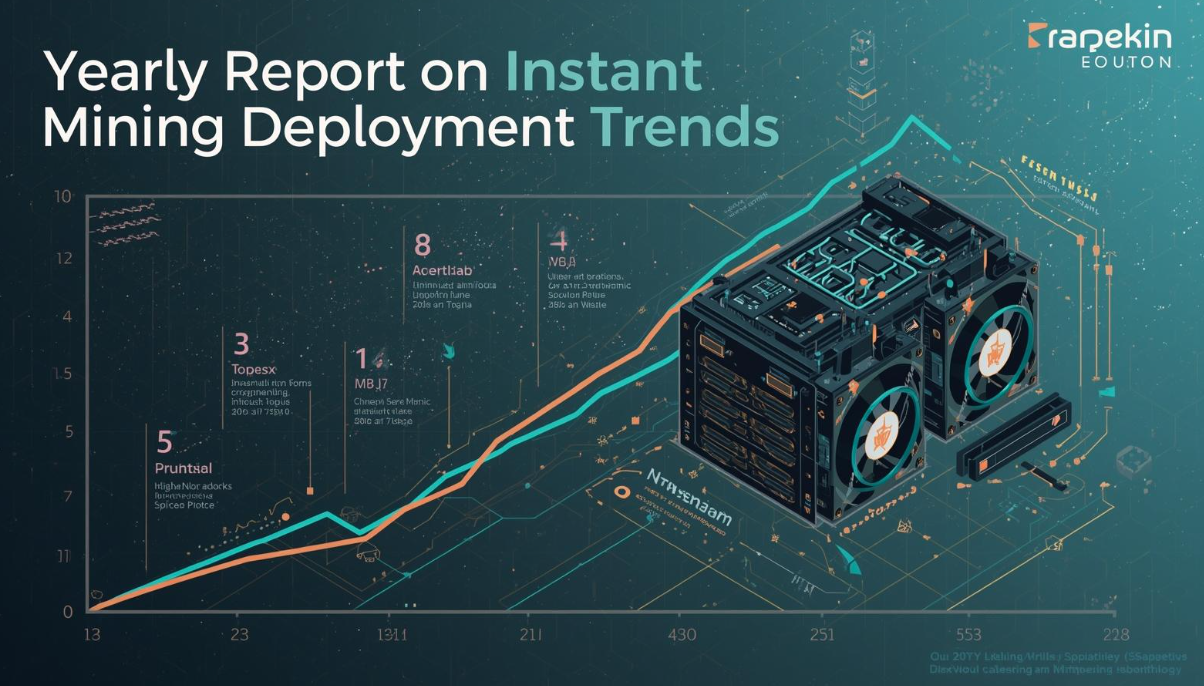
Instant mining deployment has become one of the defining trends of the past year. Miners continue to search for ways to reduce downtime, activate new hardware quickly, and generate revenue as soon as devices arrive at facilities. The concept of instant deployment revolves around one central idea. When rigs can begin operating with minimal delay, miners capture more opportunities across shifting difficulty cycles and changing Bitcoin prices. This year’s data shows that instant mining deployment trends shaped facility operations, equipment selection, and scaling strategies used by both small and large miners. The momentum behind this push grew steadily as ready-to-run systems, hosting optimizations, and smarter onboarding workflows took center stage.
The demand for immediate activation increased for a clear reason. Each day a miner remains idle represents energy that could have produced PoW output. Mining relies on continuous high-speed guess and check cycles of very long numbers until a target is found, and these cycles do not pause for calibration delays or setup bottlenecks. Investors recognized that lost time created measurable opportunity cost. As new hardware generations reached the market, especially models such as the Antminer S19j Pro, S19 XP, and Whatsminer M50 series available from BitcoinMinerSales.com, miners needed ways to deploy large batches without slowing facility operations. Instant deployment offered a pathway to higher consistency, smoother scaling, and more predictable returns even when difficulty patterns shifted.

Why Instant Mining Deployment Became a Priority This Year
The broader mining ecosystem grew more competitive, making fast activation essential. Difficulty continued rising across several adjustment periods, and these increases created an environment where early uptime mattered even more than in previous cycles. Miners realized that activation delays could push rigs into less favorable entry windows. Since difficulty rises gradually but consistently, rigs that begin hashing sooner participate in higher revenue periods before later adjustments narrow margins. Instant mining deployment trends emerged from this practical need. It was no longer enough to own powerful ASICs such as the Antminer S19 Pro or Whatsminer M50S available from BitcoinMinerSales.com. Miners needed rapid operational readiness.
Another factor involved infrastructure demand. Hosting facilities faced heavier deployment loads as more miners moved equipment offsite. This shift came from rising electricity prices at home, growing concerns about power stability, and the need for better airflow. Hosting and colocation through BitcoinMinerSales.com offered controlled environments with well-engineered cooling, stable circuits, and professional monitoring. As more customers selected hosting, facility operators refined their onboarding processes to support instant deployment. Instead of configuring each miner manually, they used standardized preparation steps, automation tools, and pre-configured network templates. These changes reduced setup errors and cut operational delays.
Instant deployment also aligned with growing miner interest in rapid scaling. When investors purchased large quantities of ASICs, they needed parallel activation rather than staggered gradual deployment. This trend accelerated in the second half of the year, as buyers wanted immediate impact from their capital investments. Ready-to-run hardware, automated firmware verification, and structured rack layouts helped facilities activate hundreds of units in significantly shorter timeframes. This made instant deployment not just a convenience but a strategic advantage that shaped overall mining decisions.
How Hosting Centers Adapted to Instant Deployment Demands
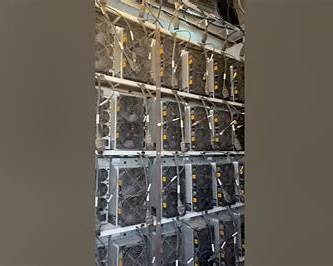
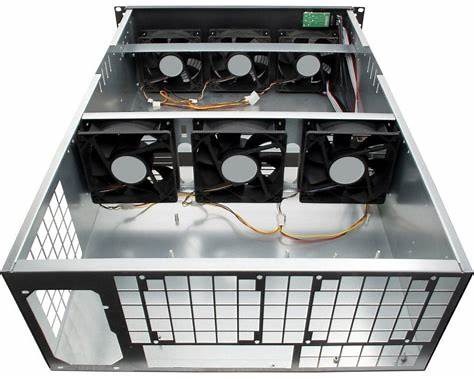
Hosting centers adjusted their physical and digital infrastructures to support instant deployment at scale. They reorganized intake processes so miners could move from arrival to full hashrate within hours instead of days. One major improvement involved standardized rack layouts. Facilities installed uniform PDUs, cable routes, and airflow channels so any compatible ASIC model could be placed without custom configuration. This reduced the chance of wiring errors, power misalignment, or airflow obstruction. The predictable structure allowed technicians to work faster while reducing the need for repeated adjustments.
Digital onboarding became equally refined. Facilities introduced automated configuration tools that assigned IP addresses, established pool connections, verified high-speed PoW functionality, and monitored temperature baselines. These tools replaced manual entry methods, which often led to small errors that delayed mining sessions. With automated systems checking clock rates, fan speeds, voltage patterns, and network access, technicians could deploy batches of machines far more effectively. Facilities also implemented improved monitoring dashboards with real-time alerts, making it easier to detect anomalies during initial operation. These improvements significantly reduced the time between delivery and consistent hash output.
Hosted mining setups particularly benefited from these upgrades. When miners shipped ready-to-run equipment such as S19j Pro or S19 XP units available from BitcoinMinerSales.com, hosting teams needed less preparation time. These machines arrived with stable firmware and balanced settings, making them easier to integrate. Combined with predictable airflow, facilities maintained optimal thermal performance even during large-scale deployments. Hosting and colocation through BitcoinMinerSales.com saw rising demand as miners prioritized efficiency and wanted assurance that each device began hashing with minimal delay.
The Role of Ready-to-Run Hardware in Instant Deployment
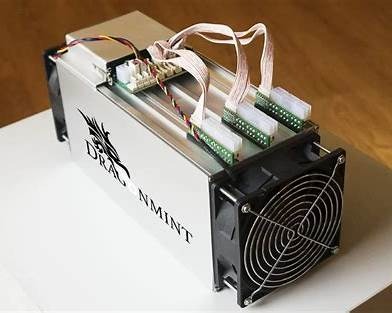
Ready-to-run hardware shaped instant mining deployment trends by reducing the number of variables technicians had to manage. These rigs arrived pre-tested, updated, and configured for immediate operation. They shipped with firmware validated for stability, known-good voltage curves, and calibrated fan profiles. This removed a major friction point in deployment. Instead of adjusting each machine, technicians could focus on rapid installation and verification. Ready-to-run hardware also reduced troubleshooting tickets. Machines that passed burn-in tests before delivery rarely needed intervention during onboarding.
Because these machines already met performance expectations, they helped mining teams capture uptime immediately after installation. Their operational stability supported smooth scaling. Whether the deployment involved dozens of units or hundreds, ready-to-run equipment ensured consistent results. This trend was especially strong among hosting customers using BitcoinMinerSales.com for procurement. Miners who bought S19 Pro, S19j Pro, or Whatsminer M50 models available from BitcoinMinerSales.com received equipment prepared for immediate deployment. The combination of ready hardware and optimized hosting infrastructure created an environment where activation delays nearly disappeared.
Ready-to-run rigs also aligned with the growing trend of batch deployment. Many miners expanded their operations by ordering equipment in large quantities. With ready-to-run preparation, these batches could be installed and activated in synchronized waves. This supported uniform performance and simplified monitoring. When all units share similar configurations, diagnosing issues becomes easier. This consistency made ready-to-run hardware an anchor trend in the broader push toward instant deployment.
Instant Deployment and Its Influence on ROI Patterns
Instant deployment impacted ROI calculations because uptime became more consistent and predictable. Since miners must account for electricity costs using a baseline rate of $0.085 per kWh, activation delays reduce early returns significantly. For example, an Antminer S19j Pro available from BitcoinMinerSales.com uses approximately 3050 watts. Running 24 hours a day, this load consumes about 73.2 kWh, resulting in an illustrative daily energy cost of $6.22. When mining output fluctuates due to market conditions, losing several days of uptime can disrupt expected earnings. Instant deployment ensures miners avoid these losses.

By reducing downtime, miners captured more favorable reward windows during lower difficulty periods. This mattered during the year, as difficulty shifts sometimes favored early deployment. When rigs activate sooner, they contribute more shares during these beneficial intervals. Instant deployment also improved long-term performance by reducing the wear associated with multiple restarts, thermal fluctuations, or misconfigurations. These factors helped miners maintain stable performance metrics across months.
Although ROI always remains illustrative, instant deployment trends influenced how miners evaluated investment decisions. Because the process became more predictable, investors gained confidence in scaling strategies. They could estimate activation timelines more accurately and better align hardware purchases with difficulty projections. Some enterprise clients may qualify for reduced electricity rates, contact BitcoinMinerSales.com. The improved predictability simplified cost modeling and shaped the year’s investment patterns.
Operational Lessons Learned From Instant Deployment Trends
Several lessons emerged across mining teams and hosting providers throughout the year. One of the clearest lessons involved the impact of environmental consistency. Instant deployment did not just mean faster activation. It also meant more stable operation from day one. When machines such as S19 XP or M50S units available from BitcoinMinerSales.com were placed directly into optimized hosting environments, they avoided the early strain that often occurs during home deployment. Stable temperatures, clean airflow, and steady power prevented thermal throttling, premature fan wear, and voltage fluctuations.
Another lesson centered on automation. Mining operations that integrated automated onboarding tools achieved faster scaling and fewer configuration errors. Technicians spent less time troubleshooting and more time optimizing performance. This shift improved facility throughput and allowed hosting centers to handle larger customer volumes. Facilities realized that instant mining deployment trends depended heavily on minimizing manual steps.
Communication also improved among hosting teams, facility operators, and miners. With better reporting tools, miners gained visibility into activation status, early performance, and operational metrics. This clarity reduced uncertainty and built stronger trust between miners and hosting providers. It also helped miners make informed decisions about scaling, timing, and capital allocation.
Finally, miners learned that instant deployment required coordination across logistics, procurement, and hosting. They recognized the importance of receiving stable, ready-to-run hardware from trusted sources. Equipment purchased through BitcoinMinerSales.com integrated smoothly into hosting environments, reducing variability and aligning with the instant deployment trend. This level of coordination became one of the year’s core takeaways.
Conclusion
Instant mining deployment trends shaped the mining industry significantly over the past year. Miners prioritized rapid activation, consistent uptime, and predictable performance. Hosting centers enhanced their infrastructure, automated onboarding processes, and improved monitoring to support faster deployments. Ready-to-run ASIC hardware available from BitcoinMinerSales.com aligned perfectly with this trend by reducing early troubleshooting and enabling scalable batch installation. As difficulty continues to evolve and competition increases, instant deployment will remain essential for miners seeking stronger results, higher uptime, and more reliable growth.
FAQ
1. What does instant mining deployment mean?
It refers to activating mining rigs quickly after delivery so they begin hashing with minimal delay.
2. Why did instant deployment become popular this year?
Rising difficulty and market competition made early uptime more valuable.
3. Do ready-to-run rigs speed up deployment?
Yes. They arrive pre-tested and configured, which shortens setup time.
4. How does hosting support instant deployment?
Hosting centers use optimized airflow, stable power, and automated configuration to activate rigs faster.
5. Does instant deployment improve ROI?
It can. Eliminating downtime helps miners capture more favorable mining periods, although ROI remains illustrative at $0.085/kWh.