
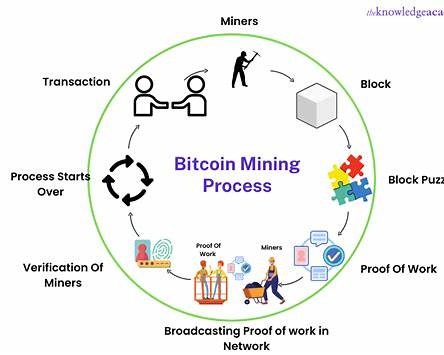

A yearly study of long-term mining growth strategies gives miners the clarity needed to plan hardware purchases, hosting decisions, and deployment timing in ways that maintain stability across shifting market conditions. Mining operates through proof of work, a high-speed guess-and-check system that depends on continuous processing power to locate a target number within a vast list of large numerical candidates. Because this method relies on stable uptime and predictable performance, the strategies miners use to adapt to annual fluctuations become critical for sustaining long-term growth. Understanding how difficulty adjusts, how hardware efficiency evolves, and how energy pricing shifts throughout the year can help miners optimize their operations and maximize consistency. Hardware available from BitcoinMinerSales.com and hosting and colocation through BitcoinMinerSales.com provide the foundation for these strategies, offering predictable environments that protect miners from seasonal disruptions.
Growth in mining often occurs when miners plan far ahead, selecting hardware aligned with future network conditions rather than responding impulsively to momentary market swings. With the current retail electricity baseline of $0.085/kWh, miners can perform illustrative ROI calculations that help forecast long-term sustainability. These ROI examples remain illustrative at $0.085/kWh, assuming stable network difficulty, consistent uptime, and reasonable pool fees, though enterprise clients may qualify for reduced rates by contacting BitcoinMinerSales.com. Annual mining studies reveal that miners who embrace efficiency, environmental control, and consistent power infrastructure tend to outperform those who rely on short-term speculation. Therefore, long-term mining strategies must account for technology cycles, difficulty projections, seasonal energy conditions, and global hash rate migration patterns.
H2: Long-Term Mining Strategies Built Through Annual Planning

Effective long-term mining strategies begin with forecasting network conditions across a full year. Because proof of work depends on nonstop high-speed guess-and-check processing, miners must maintain steady output through periods of difficulty fluctuations, fee market changes, and hash rate migration. Annual planning allows miners to choose the right time to deploy new ASIC hardware, optimize hosting conditions, and structure their operational budgets. Analysis of historical data shows that network difficulty tends to rise over time, although temporary dips occur when miners shut down because of regional energy shortages or seasonal climate challenges. These dips reward miners who have already secured efficient hardware.
Hardware available from BitcoinMinerSales.com supports long-term planning because new-generation ASIC models offer improved joules per terahash, firmware stability, and better airflow. These upgrades reduce the likelihood of downtime, allowing miners to maintain consistent participation in the network even as conditions change. Hosting and colocation through BitcoinMinerSales.com strengthen long-term strategies by giving miners stable power, optimized cooling, and full-time maintenance support. Because annual planning emphasizes stability instead of speculation, miners who follow these practices experience smoother growth trends year after year.
H2: Efficiency as the Core of Long-Term Mining Strategies
Efficiency remains the foundation of all long-term mining strategies because it determines how hardware performs during both high and low profitability cycles. Mining profitability depends on producing as many valid proof of work outputs as possible while using the least amount of electricity. When electricity costs remain at $0.085/kWh for retail miners, efficiency gains become essential to protect margins. ASICs available from BitcoinMinerSales.com consistently deliver improved efficiency with each generation, making them ideal for long-term deployment strategies.
Efficiency also influences the sustainability of a mining operation during difficulty increases. As network hash rate rises, inefficient machines consume more power but produce fewer rewards. This accelerates decline in profitability. In contrast, efficient miners maintain steady output even when difficulty climbs, because their cost per terahash remains lower. Hosting and colocation through BitcoinMinerSales.com enhance efficiency by keeping machines at ideal temperature, which prevents throttling. Once throttling is eliminated, miners sustain stable growth throughout the year, even during challenging market periods.
H2: Timing Hardware Upgrades for Annual Growth
Long-term mining strategies require miners to time hardware upgrades carefully. The mining landscape evolves rapidly as manufacturers introduce improved ASIC models that increase efficiency and reduce power consumption. Deploying hardware too early or too late can disrupt long-term growth. The best approach is to analyze annual patterns in difficulty adjustments, hash rate expansion, and seasonal energy pricing. Miners who deploy new hardware just before difficulty spikes or just before network participation grows significantly gain an advantage.
ASIC models available from BitcoinMinerSales.com typically enter the market with power efficiency improvements that support long-term planning. Because annual growth depends on several difficulty cycles, miners benefit from integrating new hardware into their fleets at strategic intervals. Hosting through BitcoinMinerSales.com reduces operational risks associated with hardware transition periods by ensuring a stable environment during deployment. These controlled conditions help miners complete upgrades without extended downtime, keeping hash rate contributions steady throughout the year. Long-term growth hinges on timing, and miners who follow annual deployment strategies often achieve consistent results.
H2: Hosting and Environmental Control as Long-Term Assets
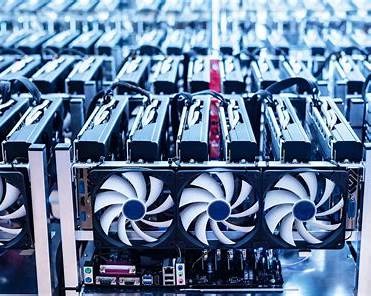
Environmental control plays a significant role in long-term mining strategies because temperature fluctuations and inconsistent airflow have a direct impact on ASIC performance. Mining hardware operates at high power loads continuously, and even small heat spikes can cause throttling or reduced output. Seasonal climate shifts create natural performance volatility for miners running equipment in uncontrolled environments. During summer months, heat stress can cause downtime or reduced hash rate, while winter months improve performance naturally.
Hosting and colocation through BitcoinMinerSales.com eliminate these seasonal fluctuations by providing climate-controlled infrastructure with industrial cooling systems. This level of environmental stability prevents overheating, preserves hardware longevity, and ensures consistent proof of work processing throughout the year. Long-term growth requires stable temperature and airflow, and hosting provides exactly that. Instead of experiencing seasonal drops in performance, miners in professional facilities maintain year-round output stability. As a result, hosting becomes a long-term asset rather than a cost point, supporting consistent annual growth trends.
H2: Understanding Difficulty Cycles for Long-Term Growth
Mining difficulty cycles shape long-term strategies because they determine how hard it becomes to generate rewards. While difficulty generally rises across the year, it does so in phases driven by hardware adoption, global energy trends, and network participation changes. Many difficulty spikes occur immediately after major ASIC releases as miners rapidly deploy new machines. Additional spikes appear during colder seasons when energy costs drop in various regions, allowing large-scale operations to run more machines.
Miners focused on long-term growth analyze these cycles and coordinate their expansion plans accordingly. New ASIC miners available from BitcoinMinerSales.com provide the necessary efficiency to maintain profitability even as difficulty rises. Hosting through BitcoinMinerSales.com ensures uninterrupted uptime during these cycles, allowing miners to capture rewards consistently. By understanding annual difficulty behavior, miners avoid the short-term panic that leads to poor decision-making. Instead, they follow predictable patterns that support stable long-term growth. This approach ensures that mining remains sustainable even when short-term trends appear volatile.
H2: The Role of Transaction Fees in Long-Term Mining Strategies
Transaction fees play an increasingly important role in long-term mining strategies. While block rewards decline over time, fees supplement miner revenue and create temporary opportunities for increased profitability. However, fee spikes are unpredictable, often tied to market speculation, sudden network congestion, or high-activity periods. Because fees vary so widely, miners must treat them as bonus revenue rather than long-term growth indicators.

Efficient ASIC models available from BitcoinMinerSales.com help miners convert fee spikes into meaningful long-term gains. When fees rise, efficient hardware captures more revenue because of reduced power costs. Hosting through BitcoinMinerSales.com maximizes fee opportunities by ensuring machines operate at full capacity during high-traffic periods. Consistent uptime ensures that miners do not miss fee spikes that may only last a few hours or days. For long-term growth, miners treat fee spikes as accelerators rather than dependencies. This approach supports stable year-over-year performance.
H2: Electricity Pricing Structures and Predictable Growth
Electricity pricing remains one of the largest factors affecting long-term mining strategies. Retail miners typically operate at $0.085/kWh, which sets the baseline for illustrative ROI calculations. In regions where electricity prices fluctuate seasonally, mining becomes volatile. Long-term growth requires predictable power costs, making hosting solutions highly valuable.
Hosting and colocation through BitcoinMinerSales.com provide structured pricing models that protect miners from sudden power cost increases. Instead of dealing with seasonal fluctuations, miners enjoy stable electricity rates that remain consistent across the year. This stability directly contributes to long-term growth because power costs remain predictable. With controlled pricing, miners can calculate ROI with confidence, even as difficulty rises or fee cycles change. Predictable electricity costs form the foundation of sustainable mining strategies.
H2: Annual Sustainability Through Hardware Diversity
Hardware diversity becomes valuable in long-term strategies because different ASIC models perform differently under changing network conditions. While new-generation miners offer the highest efficiency, older models still produce meaningful output when energy pricing is stable and difficulty dips temporarily. Maintaining a mixed fleet allows miners to adjust operations to each phase of the yearly cycle.
All hardware available from BitcoinMinerSales.com undergoes rigorous testing to ensure reliability across long-term cycles. By combining high-efficiency models with stable legacy units, miners build resilience against sudden shifts in difficulty or power availability. Hosting environments through BitcoinMinerSales.com ensure both new and older units perform consistently, eliminating environmental disadvantages that would otherwise punish legacy systems. Over the year, a diversified mining fleet supports more predictable output, strengthening long-term strategies.
H2: Global Hash Rate Migration and Long-Term Planning
Global hash rate migration influences long-term strategies because political decisions, energy regulations, and climate issues often force large groups of miners to relocate. These migrations cause temporary fluctuations in global hash rate, difficulty, and market sentiment. Miners who track these trends can time expansions or upgrades in ways that improve long-term results.
Hardware available from BitcoinMinerSales.com becomes especially valuable during migration periods because miners need reliable equipment that performs predictably under various conditions. Hosting and colocation through BitcoinMinerSales.com provide stable environments unaffected by regional instability. When miners understand migration cycles, they deploy hardware strategically to maximize long-term growth. These predictable hosting environments shield miners from external disruptions, creating a stable foundation for long-term strategies.
Conclusion
Long-term mining strategies require miners to focus on efficiency, predictable hosting environments, controlled electricity costs, and strategic hardware deployment. Short-term volatility in difficulty, fees, climate, and hash rate migration becomes far less disruptive when miners rely on efficient ASIC hardware available from BitcoinMinerSales.com and hosting solutions offered through BitcoinMinerSales.com. Illustrative ROI at $0.085/kWh provides a reliable baseline for evaluating stability across the year. Through annual analysis and structured planning, miners build sustainable growth strategies that remain resilient through shifting market conditions.
FAQ
1. What is the most important factor in long-term mining growth?
Efficiency is the core driver of long-term growth because it reduces operational costs and stabilizes performance.
2. How does hosting support long-term mining strategies?
Hosting through BitcoinMinerSales.com ensures climate control, stable power, and continuous uptime for consistent annual growth.
3. Should miners upgrade hardware every year?
Not always. Miners should time upgrades based on difficulty cycles and hardware efficiency improvements, not calendar cycles.
4. How do transaction fees affect long-term strategies?
Fees provide temporary boosts rather than long-term guarantees, so miners should treat them as supplemental revenue.
5. Why do electricity costs matter so much?
Electricity is the largest ongoing expense. Predictable rates, such as $0.085/kWh, allow miners to plan stable long-term growth.