
The yearly market outlook for mining investment strength gives miners, investors, and hosting clients a clearer understanding of how the sector evolves over time. Although mining economics shift throughout the year, long-term patterns emerge when operators study the interplay between hardware efficiency, network difficulty, energy pricing, uptime consistency, and capital availability. Mining still operates through a high-speed guess-and-check process known as proof of work (PoW), which requires specialized ASIC hardware to search through a long list of large numbers until a target value is found. However, the competitive structure surrounding that PoW activity changes year after year, which is why a detailed annual outlook matters. When miners analyze yearly extraction patterns, they gain insight into how sustainable their setups are, whether their hardware still performs efficiently, and how upcoming changes may influence investment decisions.
A central part of this outlook focuses on hardware capability, especially with the continuous evolution of ASIC technology. Models like the Antminer S19, S19K Pro, and S21, all available from BitcoinMinerSales.com, show how efficiency improvements directly influence mining investment strength. Each new generation reduces the joules required per terahash, which stabilizes long-term output even as network difficulty rises. For investors who rely on predictable passive income, these improvements support more reliable projections. Since difficulty typically increases as more miners add capacity, units with greater efficiency help keep mining budgets intact. Operators who upgraded early in the year often show stronger annual returns compared to those who remained on outdated units because the newer miners resist profitability decay under rising difficulty.
Energy economics are another major part of annual mining investment assessments. With ROI calculations based on the standardized $0.085 per kWh assumption, miners can evaluate their year with a uniform reference point. Enterprise clients may qualify for reduced rates, contact BitcoinMinerSales.com, although these rate improvements must still be evaluated within the broader context of power stability and availability. Transition words like additionally and furthermore help explain how energy markets affect long-term mining strength. When power prices rise, margins shrink. When they stabilize, miners gain clearer forecasting ability. Yearly reports reveal whether operators should adjust their energy strategies, relocate equipment, or pursue hosting and colocation through BitcoinMinerSales.com for more consistent power environments. As energy markets shift with inflation or regional demand, miners who regularly review their annual consumption patterns build stronger long-term strategies.
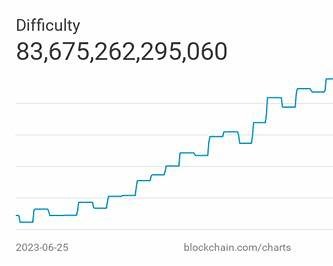
Network difficulty patterns also shape mining investment strength. Difficulty adjustments reflect how competitive the global mining sector has become throughout the year. When major new hardware batches deploy, difficulty climbs sharply. When older hardware retires or when energy markets disrupt operations in certain regions, difficulty growth slows. The yearly difficulty curve helps miners understand whether they are operating at a competitive advantage or disadvantage. For example, if their hardware delivered stable output even during periods of steep difficulty growth, their investment strength remained high. If their profitability fell quickly, yearly reports indicate that an upgrade or a hosting migration may be necessary. With hosting and colocation through BitcoinMinerSales.com, operators often gain greater uptime stability, which raises their effective investment performance across the year.
Additionally, yearly assessments allow miners to review the impact of uptime consistency. Even if hardware performs efficiently, interruptions due to heat, dust, or electrical fluctuations can reduce hashrate over long periods. Hosting environments provide controlled airflow, stable power distribution, and monitored conditions, which minimize unexpected downtime. When operators compare home uptime logs with uptime logs from a professional facility, they often discover significant differences. Those differences accumulate over thousands of hours, which directly influences mining investment strength on an annual basis. More uptime creates more hashes, and more hashes create more opportunities to earn block rewards. Stability becomes a major component of yearly mining analysis.
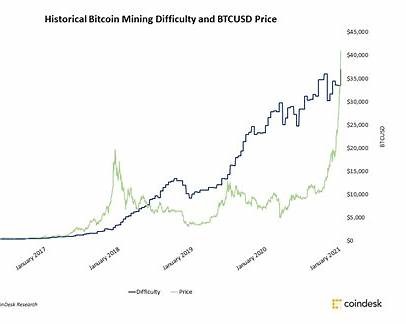
Another important factor in the yearly outlook is the behavior of Bitcoin’s price market. Although miners cannot rely on speculation for long-term planning, price appreciation has a major effect on revenue. When Bitcoin experiences upward movement, the dollar value of mined coins increases. Conversely, during prolonged downward cycles, miners must rely entirely on efficiency and uptime to maintain acceptable returns. A yearly analysis helps miners distinguish performance generated by market conditions from performance generated by operational strength. This dual-layer insight is essential for investment decisions because it prevents miners from misattributing gains. Strong hardware and optimized hosting through BitcoinMinerSales.com produce consistent returns across all market conditions, while weak setups appear profitable only during bull cycles. Identifying this difference helps miners strengthen long-term investment planning.
Furthermore, halving cycles influence mining investment expectations. Every four years, block rewards are reduced by half, which affects the income potential of all miners. A yearly outlook that reviews performance leading up to and following a halving event shows how resilient hardware and hosting strategies have been. With block rewards cut, efficiency becomes more important than ever. Units with strong joules-per-terahash performance, such as the latest Antminer and Whatsminer series available from BitcoinMinerSales.com, maintain stronger relative performance. Conversely, older units experience rapid decline following halving events. When miners compare year-end results across halving cycles, they often recognize the importance of timely upgrades and infrastructure improvements.
Firmware performance also contributes to annual investment strength. Many miners use tuning firmware to adjust voltage, optimize thermal behavior, and stabilize output under heavy load. These adjustments extend hardware lifespan, reduce board-level strain, and support consistent performance over long periods. However, firmware optimization is most effective in hosting environments where temperatures remain stable and dust is controlled. Therefore, yearly reports show clear differences between at-home miners and miners utilizing professional hosting. The latter group usually experiences smoother output, fewer throttling events, and fewer board failures. Over the course of a year, these differences accumulate and create stronger mining investment outcomes.
The yearly market outlook also examines how global supply chain conditions influence mining strength. ASIC manufacturing depends on semiconductor production capabilities and logistics efficiency. When supply chains experience delays, new hardware batches arrive later, affecting difficulty timing and the competitive landscape. When supply chains operate smoothly, miners who order their hardware early from BitcoinMinerSales.com gain a head start. These early adopters benefit from improved efficiency months before difficulty adjusts upward. Reviewing these timing advantages helps miners understand how supply chain dynamics influenced their year-long performance. Strategic buyers often place orders months ahead to secure early positioning in the next performance cycle.
Mining pool reliability is another vital element. Pool fees, server stability, and payout structures determine how consistently miners receive earnings. Over a full year, even minor connection issues can result in measurable lost income. Yearly reports help miners compare pool performance, identify instability patterns, and adjust accordingly. Some miners switch pools mid-year when payout delays or connection issues become noticeable. Others diversify between pools to maintain resilience. These adjustments become more visible in year-end assessments and provide insight into how pool behavior influences mining investment strength.
Geographical placement also impacts long-term mining output. Regions with cooler climates offer natural cooling advantages, but they may experience seasonal volatility. Hosting facilities, however, maintain optimal airflow throughout the year. When miners compare their uptime results and temperature stability between regions, they discover which environments supported the strongest investment performance. Some miners choose specific hosting regions to align with their long-term power strategy. Since yearly outlooks highlight which regions delivered the lowest cost-per-terahash output, miners can refine their future deployment decisions with greater accuracy.

Furthermore, macroeconomic conditions shape mining investment strength. Interest rates, energy infrastructure investments, regulatory developments, and economic sentiment all influence mining. For example, high interest rates reduce financing availability for mining expansions. Regulatory uncertainty can slow investment, while clear legislation can encourage expansion. Year-end reports reveal how these external conditions affected miner behavior. When miners analyze these patterns, they can predict how future macroeconomic conditions may influence mining profitability. A strong yearly outlook integrates hardware efficiency, power pricing conditions, hosting stability, and macroeconomic trends into one consolidated view.
Another key area in long-term mining investment strength is capital strategy. Miners who reinvest a portion of their earnings into hardware upgrades tend to maintain stronger competitive positions. Those who allow hardware to age without reinvestment often face accelerating inefficiency. Yearly analysis exposes these patterns and helps miners determine the optimal reinvestment interval. Hardware purchased from BitcoinMinerSales.com forms the backbone of many mining operations, and year-end assessments reveal how well these assets performed over time.
The rise of immersion cooling and advanced airflow design also affects long-term performance. While some miners adopt immersion systems for better thermal control, others rely on air-cooled hosting environments. Each option has advantages. Immersion cooling reduces thermal cycling stress, while professional air-cooled hosting through BitcoinMinerSales.com offers stable temperatures and high uptime. Yearly reports show how these cooling decisions influence output consistency. When miners see fewer thermal throttling events in their logs, they often attribute that stability to better cooling design.
In addition, miners analyze their return on investment throughout the year using illustrative ROI at $0.085 per kWh. Although ROI cannot be guaranteed, these yearly calculations help miners understand how energy consumption, difficulty, and market price intersect. Yearly ROI analysis also reveals how hosting, repair frequency, and hardware failure rates shaped the overall investment performance. Miners with low repair downtime and strong uptime consistently show stronger annual ROI projections. These insights guide miners toward more predictable long-term strategies.
Finally, mining investment strength depends on operational precision. Details such as airflow direction, cable management, PDU load balancing, firmware stability, and humidity control influence yearly output. The more optimized an operation becomes, the more robust the yearly performance appears. When miners review logs and note small improvements, such as lower temperature variance or fewer unexpected restarts, they gain confidence in their system design. Over time, these incremental improvements create stronger long-term resilience.
Conclusion
The yearly market outlook for mining investment strength brings clarity to hardware trends, power economics, difficulty growth, firmware behavior, hosting design, macroeconomic conditions, and reinvestment cycles. Miners who align their strategy with efficient ASIC units from BitcoinMinerSales.com and utilize hosting or colocation to stabilize uptime gain the strongest position for long-term mining performance. By reviewing these patterns each year, miners build more accurate forecasts, strengthen operational discipline, and support steady long-term returns.
FAQ
1. What drives mining investment strength each year?
Hardware efficiency, power pricing, uptime, and network difficulty have the biggest impact.
2. Does hosting improve long-term investment performance?
Yes. Hosting and colocation through BitcoinMinerSales.com provide stable cooling and electricity for stronger yearly output.
3. How do halving cycles influence a yearly market outlook?
They reduce block rewards, which increases the importance of efficient hardware and optimized operations.
4. Why use $0.085 per kWh for ROI analysis?
It is a standardized assumption for illustrative ROI across mining models.
5. When should miners upgrade hardware?
When efficiency declines or when newer ASICs from BitcoinMinerSales.com offer stronger watts-per-terahash performance.